What a portable process chiller does on site
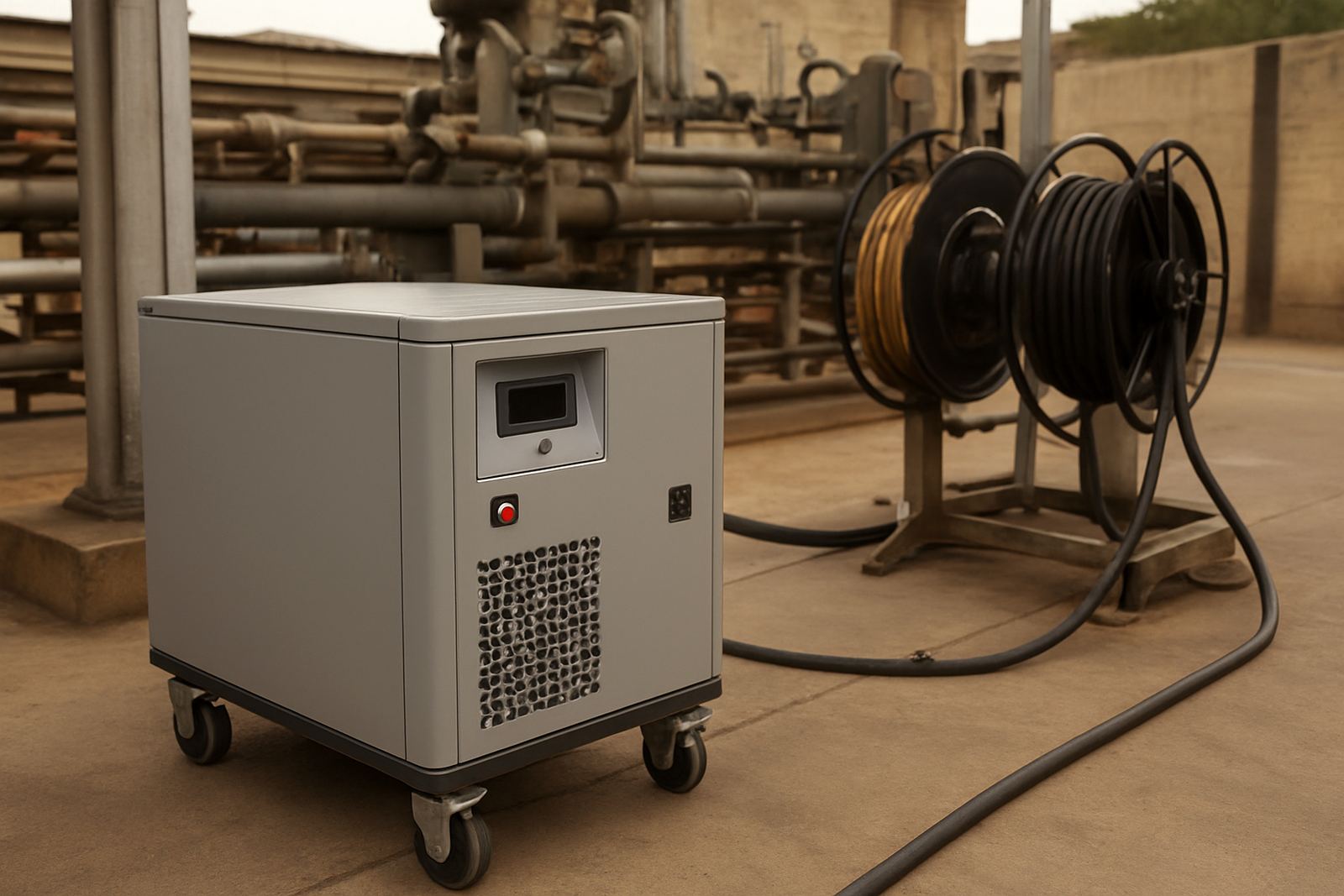
A portable process chiller is a movable water cooling unit used to hold process temperatures steady for lasers, moulds, presses and other equipment that cannot run hot. It sits on castors or a skid frame so you can move it between production stations, or park it beside the machine that needs support for the day. In busy plants around Alberton, Johannesburg, Pretoria and Durban, this flexibility helps when production shifts change often or a machine goes down and another line must take the load.
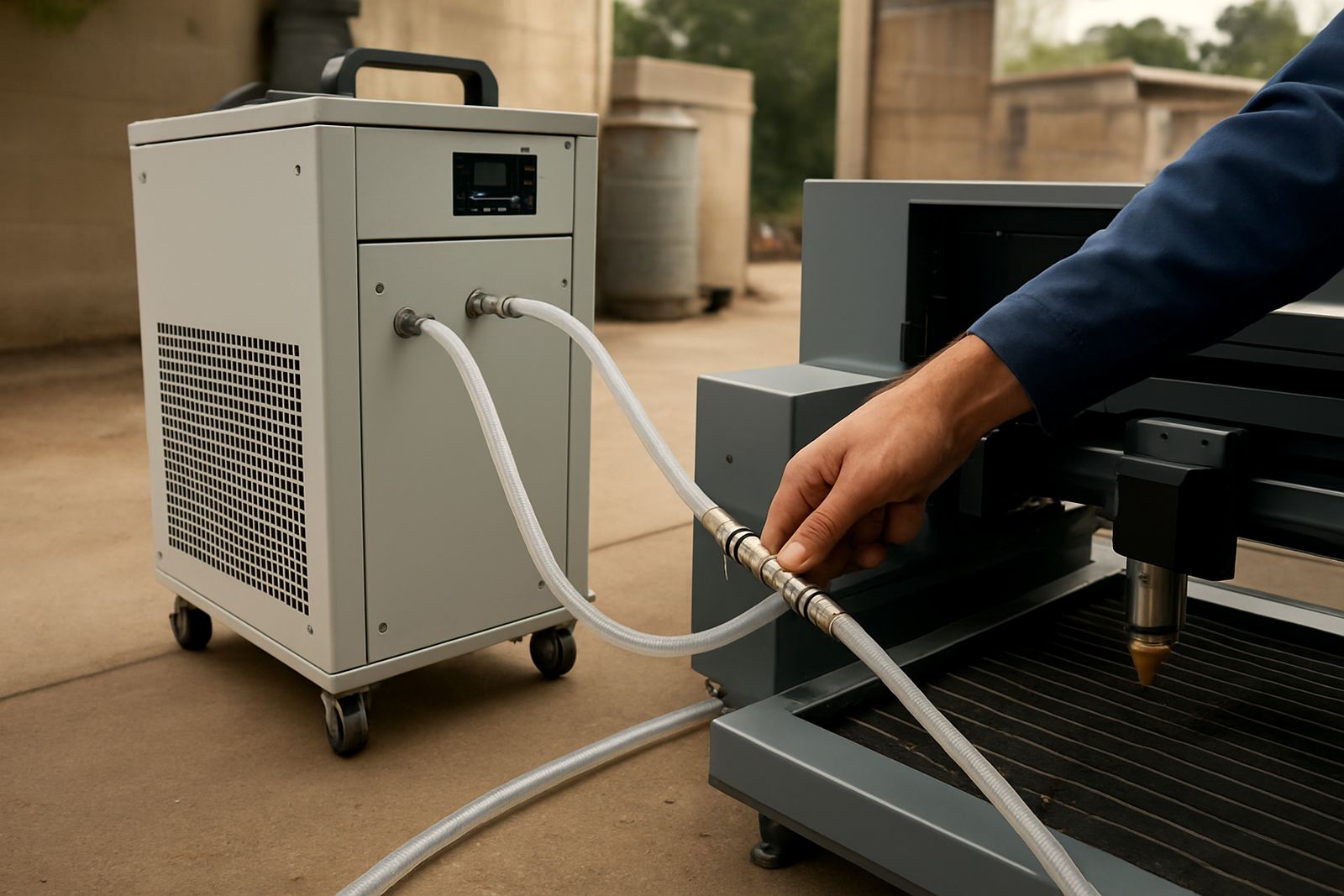
The unit circulates chilled water or glycol blend through the application, removes heat and returns the liquid at a set temperature. That helps protect optics, improve cycle consistency, and reduce nuisance stops caused by overheating. In South Africa, where summer heat and load-shedding can affect plant stability, portable cooling is a practical way to keep production moving.
Sizes, temperature ranges and options
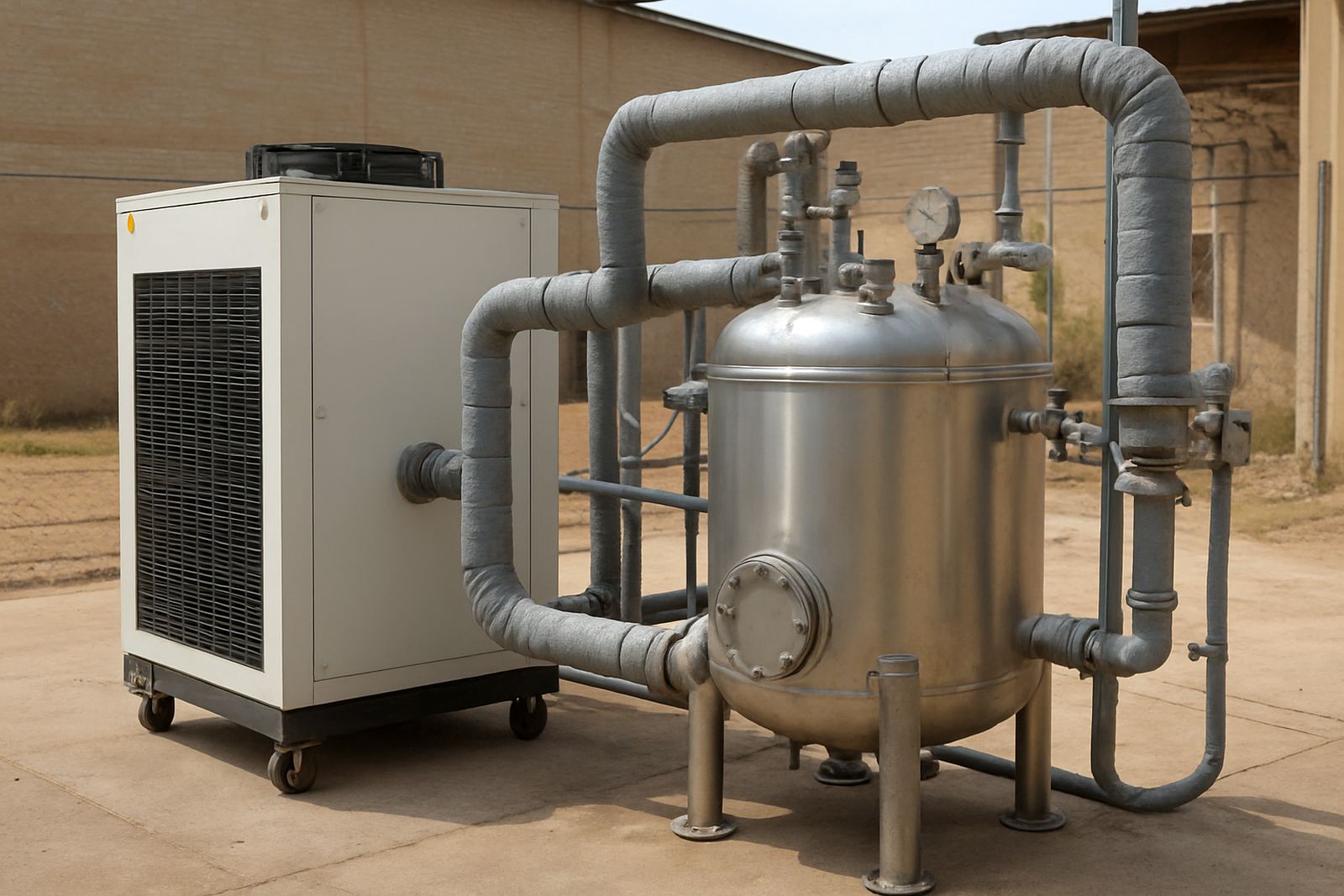
Raynen supplies portable process chillers in a range of capacities so the unit can match the heat load rather than overwork the compressor. Smaller units suit single lasers or compact moulding cells, while larger portable units support multiple process points, test rigs or temporary production areas. The right selection depends on the heat rejection required, ambient temperature, water quality and how often the unit will move.
- Cooling capacities from small workshop units to heavier industrial duty models
- Temperature control suitable for stable process water delivery
- Air-cooled or water-cooled configurations, depending on site conditions
- Single-circuit and multi-circuit options for different process layouts
- Heater, tank and pump combinations where tighter temperature control is needed
Options can include stainless steel wetted parts for better corrosion resistance, insulated tanks, low water level protection, flow switches and alarms. For coastal sites in Durban or Cape Town, corrosion resistance and regular maintenance matter because humidity and airborne salt can shorten service life.
Where this chiller works best
This type of cooling unit is a good fit for factories that do not want a fixed installation at every machine. It is used for laser cutting and marking, injection moulding, extrusion support, hydraulic oil cooling, batch processes, mixing vessels and temporary production lines. It also helps during commissioning when the permanent system is not yet ready, or when a plant needs a back-up unit during repairs.
Portable cooling is especially useful where floor space is tight or layouts change often. Plants in Germiston, Boksburg and Rustenburg often use movable units when a new line is added, a mould is swapped, or a process station must be tested before final plumbing is done. If you need temperature control for a week or for the long term, a portable unit gives you breathing room without a full rebuild.
- Laser machines that need consistent cooling for optics and tubes
- Mould temperature support for stable cycle times
- Process lines with changing stations or seasonal demand
- Temporary backup during breakdowns or planned shutdowns
- Commissioning support for new machinery and trial runs
Installation, power supply and site requirements
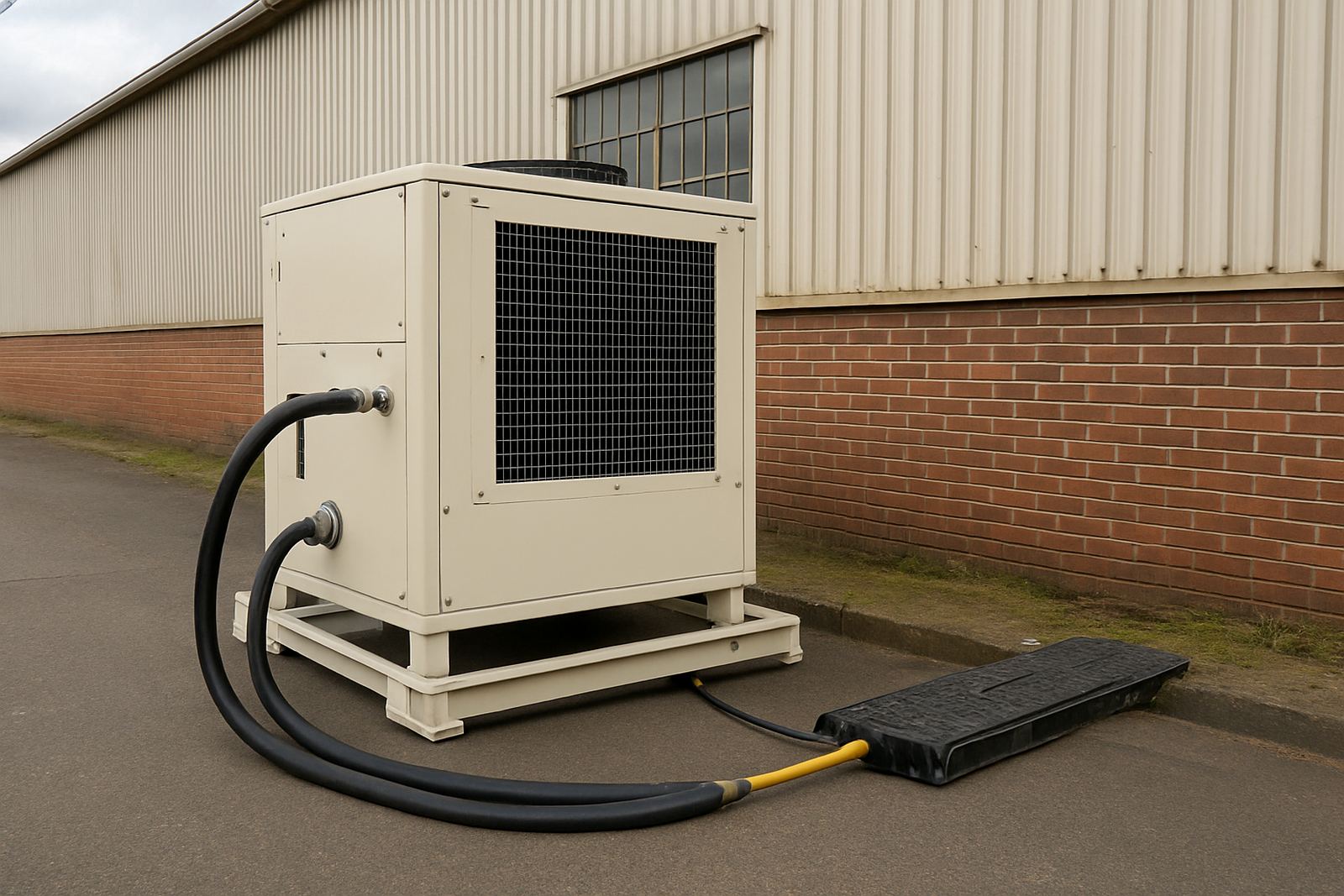
Portable does not mean plug-and-play in every case. The unit still needs proper positioning, clear airflow, suitable piping and the correct electrical supply. We check the heat load, distance to the process, available floor space, and whether the site has enough ventilation around the condenser. A poor setup can cause high head pressure, unstable water temperature and nuisance trips.
Most installations need a level surface, a clean water connection or treated closed loop, and isolation valves so the unit can be removed for service. Electrical needs depend on the model, but many industrial units require a dedicated supply with protection sized to the compressor and pump. If the plant has load-shedding or unstable power, we can advise on restart settings and control protection so the chiller comes back cleanly after an outage.
- Check available voltage, phase and breaker sizing before delivery
- Allow space for air intake, exhaust and maintenance access
- Use correct hose sizes to avoid pressure drop across the circuit
- Confirm drain points, spill control and water make-up arrangements
- Plan for safe movement across the plant with castors or lifting points
Care, cleaning and preventative servicing
A portable chiller works hardest when the water circuit is clean and the condenser can breathe. Regular service helps prevent scaling, low flow, dirty strainers and compressor stress. In Gauteng plants, dust can build up quickly around air-cooled equipment. Near the coast, moisture and corrosion demand extra attention to electrical panels and pipework fittings. If the unit is left idle between jobs, it still needs checks before being put back into service.
Our servicing can include pump checks, refrigerant inspections, pressure testing, control checks, water treatment checks and cleaning of filters and coils. Preventative maintenance is better than waiting for a breakdown because a failed chiller can stop a laser cell or moulding line in minutes. We also help with temporary cooling if your main unit is down and production has to continue while repairs are carried out.
- Clean strainers and filters at regular intervals
- Check glycol strength where low-temperature duty is required
- Inspect hoses, unions and clamps for leaks
- Keep condenser faces clear of dust, paper and packaging waste
- Test alarms, flow switches and temperature sensors during service
What to confirm before you order
To size the right portable process chiller, gather the process heat load, required water temperature, flow rate, pressure loss and ambient conditions at the site. If you are cooling a laser, mould or process line, the duty changes with production speed and the number of machines connected. A unit that is too small will struggle. One that is too large can cycle too often and waste power.
It also helps to know whether the unit must be moved often, whether there is enough power at each location, and whether the system will use water only or a water and glycol mix. If the application is outdoors or in a hot plant room, say so from the start. We can then advise on ventilation, weather protection and the right controls for the job.
- Process type and heat load in kW or refrigeration tons
- Target supply temperature and allowable temperature swing
- Required flow rate and pump pressure
- Indoor or outdoor use, plus ambient conditions
- Power supply details and space for access
If you are unsure of the figures, we can work from the machine nameplate, current operating temperatures and the symptoms you are seeing on site.
Support from Alberton to sites nationwide
Raynen is based in Alrode, Alberton and supports industrial users across South Africa, including Johannesburg, Pretoria, Durban, Cape Town and Rustenburg. Our team handles installation, commissioning, maintenance and repairs, with branch coverage in the main industrial areas around the country. That means you can get help with a portable process chiller whether you need a new unit, a back-up solution or a service visit.
Our team includes Riaan van der Merwe, Lerato Mokoena, Sibusiso Dlamini, Anika Naidoo, Pieter Joubert, Nomsa Khumalo and Thabo Maseko. When you send an enquiry through the contact page, we can help you choose the right cooling unit, confirm the site needs and plan the support around your production schedule. The aim is simple: steady temperatures, fewer interruptions and a chiller that fits the way your plant actually runs.
Key facts
| Cooling type | Portable industrial process chiller |
|---|---|
| Use case | Lasers, moulds, process lines and temporary cooling |
| Capacity range | Sized to process heat load from small cells to heavy duty plant support |
| Temperature control | Stable supply temperature with sensor-based control |
| Construction | Industrial frame, castors or skid base, service access panels |
| Options | Air-cooled or water-cooled, pump and tank variations, alarm and protection controls |