What a Laser Head Chiller Does on Site
A laser head chiller keeps the cutting head at a controlled temperature so optics, seals and internal components stay within spec. When heat drifts too far, cut quality can suffer, edges may need rework and unplanned stoppages become more likely. In busy shops around Alberton, Johannesburg and Pretoria, that kind of downtime costs more than the unit itself.
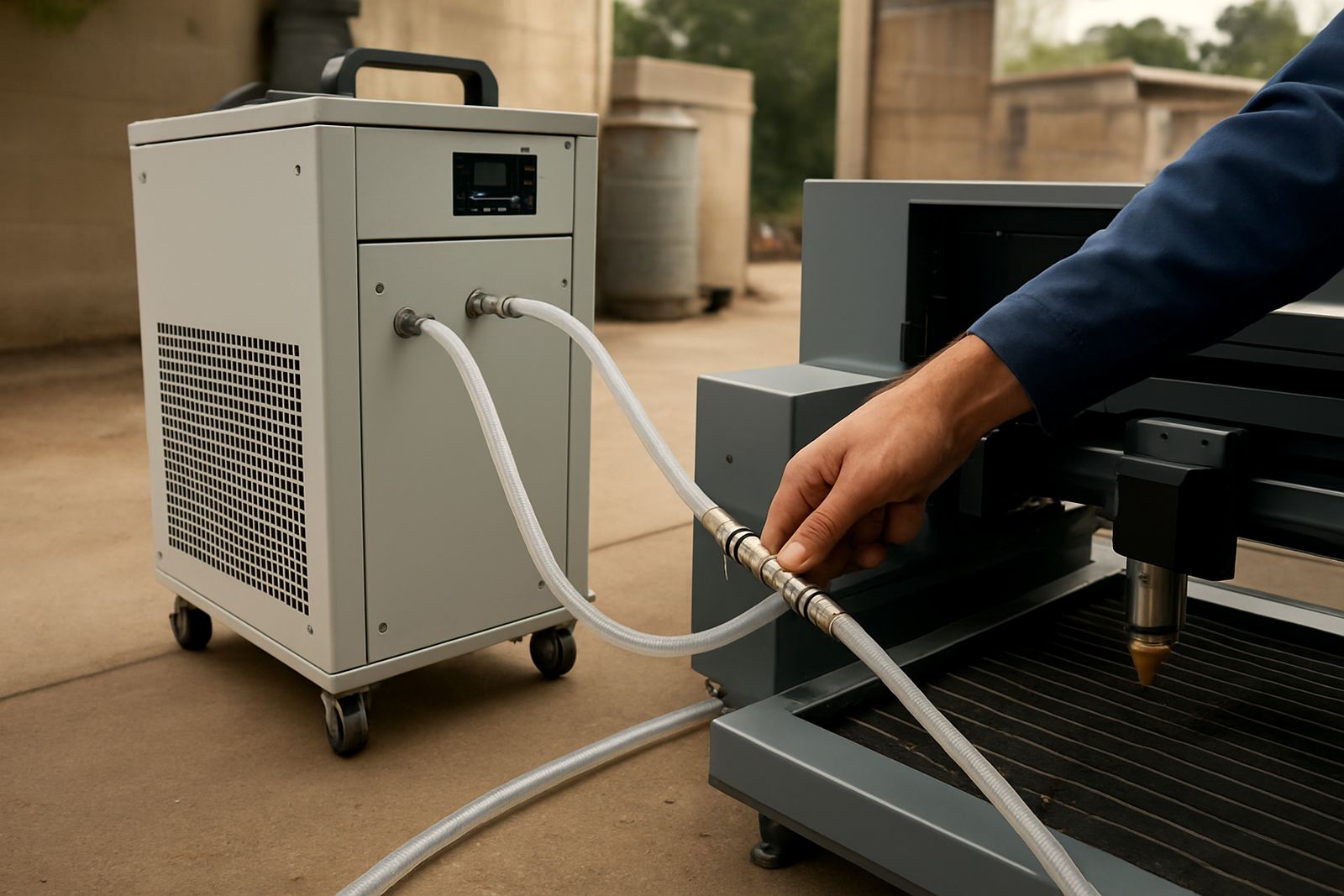
These chillers are used where the laser head needs tighter temperature control than a general plant cooling loop can give. They are set up for stable supply water, steady flow and quick response when ambient temperatures climb. That makes them suitable for fibre laser cutting systems, engraving lines and other precision applications where thermal control is part of production, not just a support function.
Raynen supplies industrial water chillers and cooling units that are sized for South African conditions, including summer heat, dust and load-shedding recovery. Units can be matched to the duty required, the room layout and the quality of the water supply on site.
Typical Sizes and Cooling Options
Laser head chillers are not one-size-fits-all. The right unit depends on the laser power, run time, heat load and whether the machine runs one shift or around the clock. Smaller units suit compact machines and light to medium cutting work, while higher-capacity chillers are better for multi-shift production and warmer locations such as Durban or coastal Cape Town where humidity can affect cabinet conditions.
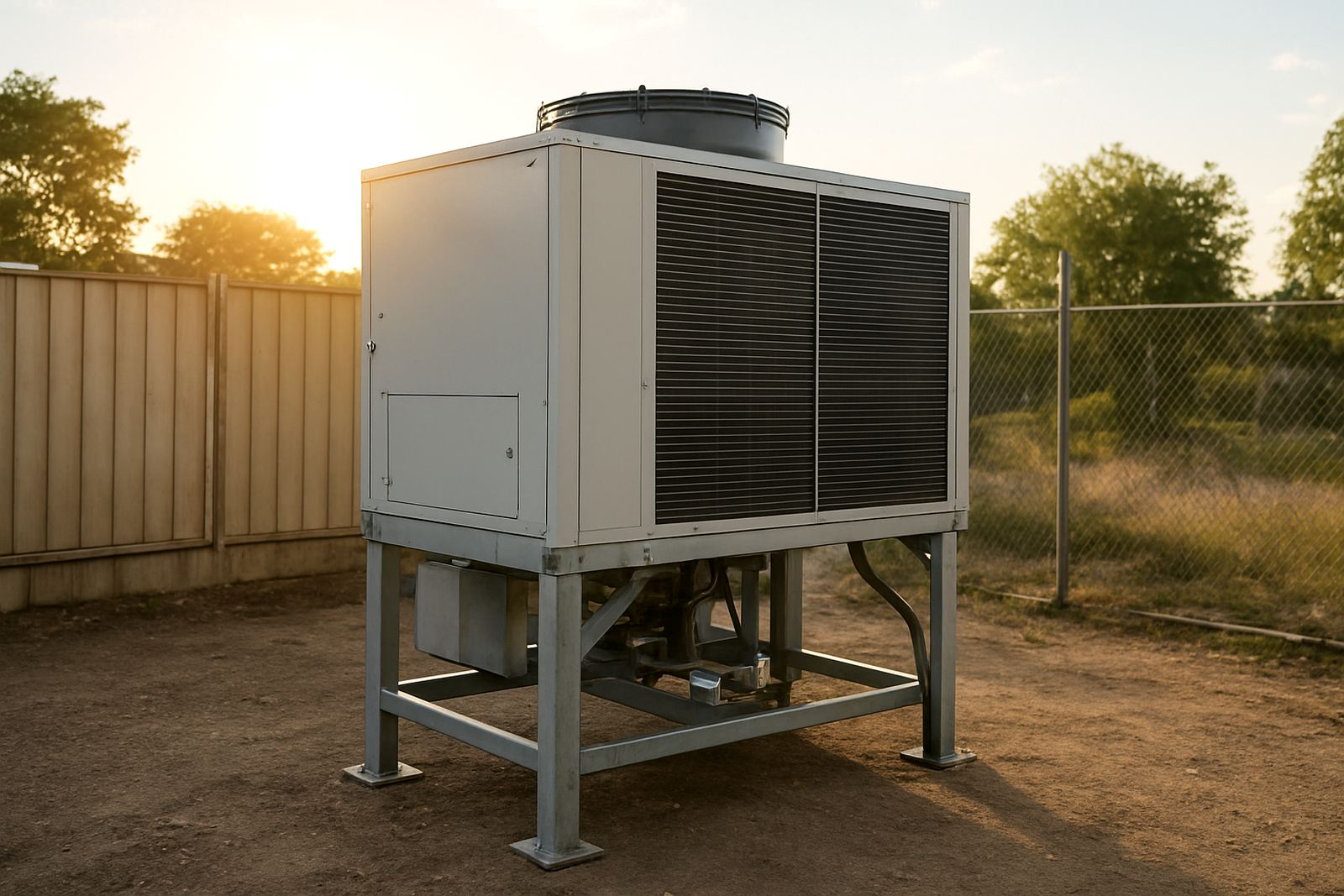
Common options include single-circuit and dual-circuit arrangements, remote-mounted condensers where site conditions allow, and units with more detailed temperature control for applications that need tighter stability. Control features may include digital display settings, alarm outputs, fault indication and start delay settings for safer restarts after power interruptions.
- Compact units for lower heat loads and smaller laser heads
- Mid-range units for general cutting and mixed production work
- Higher-capacity units for continuous use and heavy-duty applications
- Options for tighter temperature bands where cut quality is sensitive
- Units configured for easier service access in tight plant rooms
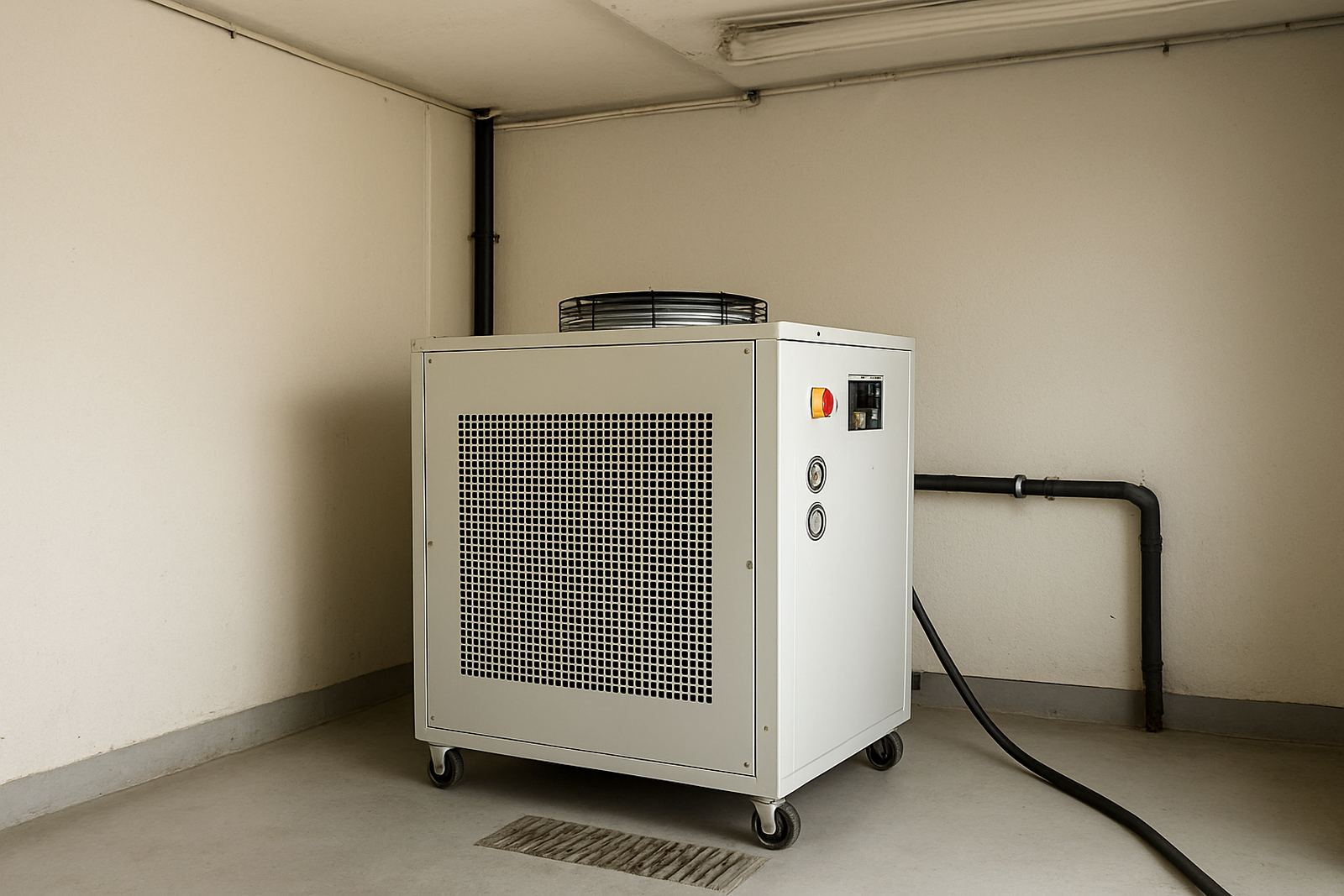
For many factories, the best choice also depends on floor space and access for maintenance. A chiller tucked beside a press line or against a wall still needs room for airflow, filters and panel access, otherwise service becomes awkward fast.
Where Laser Head Chillers Suit Best
Laser head chillers are used in fabrication plants, sheet metal workshops, engineering yards, automotive suppliers and jobbing shops that depend on steady output. They are also useful where laser heads run close to heat from other machines, welding bays or roof areas that trap warm air during the day.
These systems suit businesses that need predictable cut quality, cleaner edges and less thermal drift over long shifts. They are especially practical where production cannot stop every time the room temperature rises or the utility supply dips. In Ekurhuleni, Rustenburg and other industrial areas, that matters because many sites run with mixed loads and variable supply conditions.
- Laser cutting lines in steel and aluminium fabrication
- Precision processing where repeatable temperature control is important
- Plants with long operating hours and high ambient heat
- Sites with limited process cooling capacity on existing equipment
- Operations that need a dedicated cooler for the laser head only
If a plant already has a central chilled-water system, a dedicated laser head chiller can still make sense. It reduces dependence on shared equipment and keeps the laser head cooling load separate from moulds, process water or other plant circuits.
Installation, Power Supply and Water Requirements
Installation should be planned around the machine layout, electrical capacity and water route. Most units need a proper level base, free airflow around the condenser section and enough access to isolate valves and drains. On a crowded shop floor, that can mean planning the position before the machine is bolted down, not after.
Power requirements vary by unit size, but the supply should be stable and correctly protected. In South Africa, sites should also allow for start-up behaviour after load-shedding. If a chiller and laser restart together, the control sequence must not trip repeatedly. A qualified installer should check cable sizing, protection devices and phase balance where relevant.
Water quality is another key point. Clean water with suitable treatment helps protect pumps, heat exchangers and pipework from scaling and corrosion. On coastal sites, humidity and salt air can speed up wear on cabinets and exposed fittings, so regular checks matter. Where the cooling loop includes flexible hose, pipework and quick couplings, the installation should allow for service access and safe draining.
- Confirm electrical supply size and protection before commissioning
- Check water quality, conductivity and inhibitor needs
- Allow clearance for airflow, filter cleaning and panel access
- Plan pipe runs to avoid kinks, vibration and unnecessary pressure drop
- Set up restart logic for power interruptions and safe recovery
Care, Servicing and Signs of Trouble
Like any industrial cooler, a laser head chiller needs routine attention to stay reliable. Filters should be cleaned or replaced, water condition checked and pump operation reviewed before small issues become failures. In many plants, a quick monthly inspection prevents a much bigger stoppage later.
Watch for temperature swings, low flow alarms, unusual noise, tripping breakers, damp around fittings or a chiller that runs longer than normal to hold setpoint. Those signs may point to blocked strainers, low water quality, a weak pump, dirty coils or a control issue. If the laser head is harder to maintain at target temperature in the heat of the day, that is a warning worth checking early.
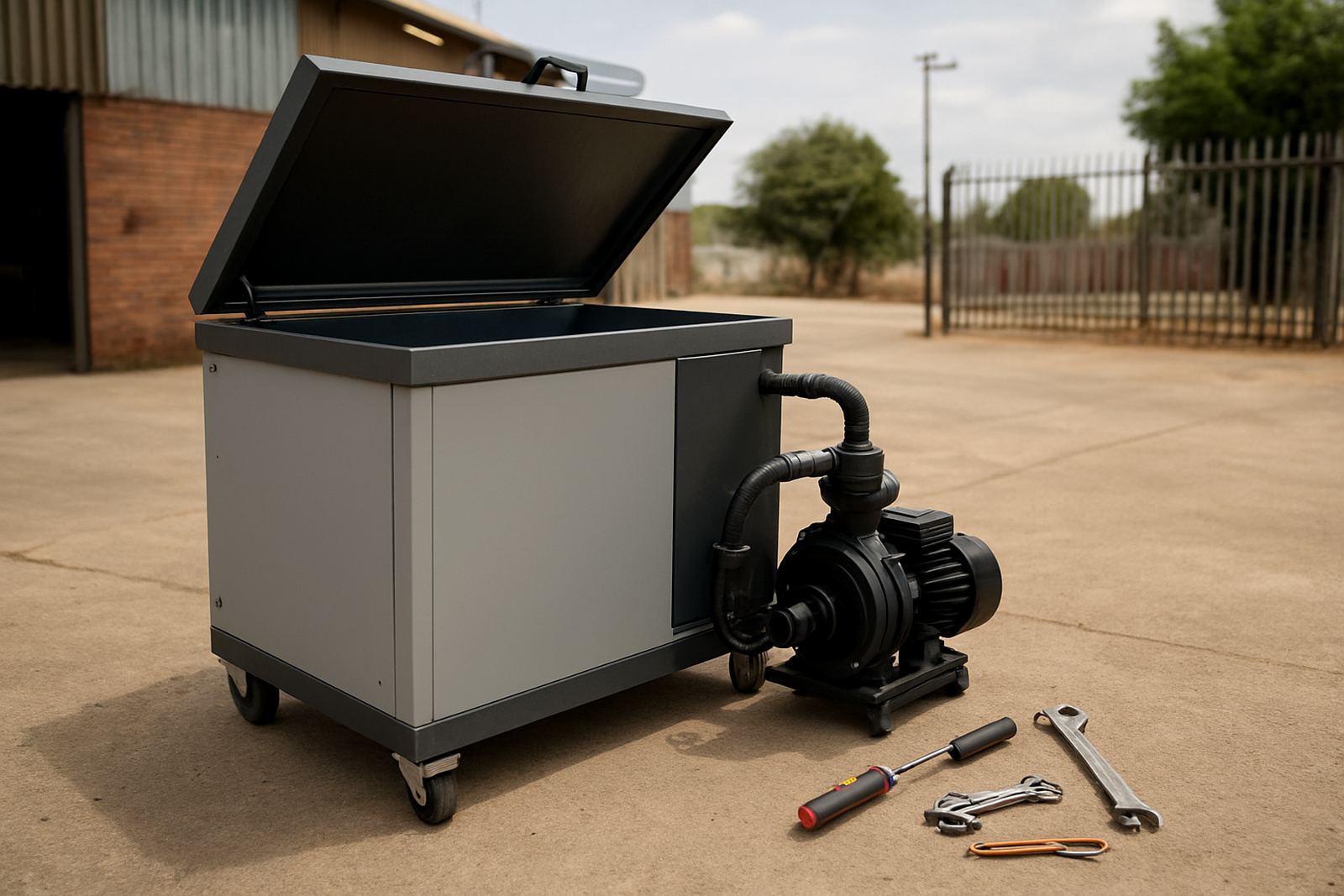
Raynen supports preventative maintenance, breakdown repairs, pump replacements, refrigeration repairs and control panel upgrades where required. For sites in Johannesburg, Pretoria, Durban, Cape Town, Rustenburg and surrounding areas, regular servicing helps keep cooling performance steady and reduces the risk of unplanned downtime. A well-kept unit usually pays for itself in fewer interruptions and less scrap.
What to Check Before You Order
Before selecting a laser head chiller, it helps to have the right operating details on hand. That includes the laser type, heat load, desired set temperature, ambient conditions and how many hours a day the equipment will run. If the machine is part of a wider process line, note whether the cooler must also handle other loads or only the laser head.
It is also useful to confirm the available electrical supply, space for the unit, water connection points and whether the site needs temporary cooling during installation or upgrades. For older machines, ask whether the pipework, sensors and control settings still match the current production setup. A mismatch between the chiller and the laser head can lead to nuisance alarms or poor control.
- Laser power and machine model details
- Target temperature and acceptable temperature band
- Ambient room temperature and ventilation conditions
- Electrical supply available on site
- Pipe lengths, connection sizes and access for servicing
- Any existing water treatment, filters or shared cooling equipment
If you are unsure, a cooling audit can identify the right capacity and any supporting work needed before the unit is installed. That is often the best route for plants in Alrode, Germiston or Boksburg where space, power and existing services may already be under pressure.
Raynen Support Across South Africa
Raynen is based in Alrode, Alberton and supports industrial cooling work across South Africa through service coverage in Johannesburg, Pretoria, Durban, Cape Town and Rustenburg, with additional support in nearby industrial areas. The team includes experienced people in operations, technical sales, projects, workshop support and customer service, so enquiries are handled by people who understand plant conditions and production deadlines.
Whether the need is a new laser head chiller, a replacement unit or fault-finding on an existing system, the aim is to keep the cooling side of the process dependable. That matters when the laser is central to throughput and there is no room for repeated stoppages.
Key facts
| Application | Dedicated cooling for laser heads on cutting and precision processing equipment |
|---|---|
| Temperature Control | Stable setpoint control with close monitoring for thermal consistency |
| Capacity Range | Sized to suit light, medium and heavy industrial laser duty |
| Construction | Industrial water chiller with refrigeration circuit, pump and control system |
| Installation Needs | Level base, airflow clearance, correct electrical supply and treated water |
| Service Support | Installation, commissioning, preventative maintenance and repairs |