What a food process chiller does in daily production
A food process chiller removes heat from water or process fluid and sends that cooling back to your equipment at a controlled temperature. In food plants, that matters because small temperature swings can change texture, fill weights, set times and shelf life. It also helps protect pumps, seals and product handling equipment from running hot through long shifts.
These units are commonly fitted to batch and continuous processes where chilled water is needed for stable production. That can include dairy lines, beverage filling, sauce preparation, meat processing, bakery cooling, packaging systems and refrigeration support circuits. In hot weather, and during load-shedding recoveries, a correctly sized chiller helps bring the line back to temperature without long delays.
Raynen supplies industrial water chillers that are built for process use rather than general comfort cooling. We size the unit to the actual heat load, ambient conditions and water quality so the system does what the plant needs, not just what the brochure says.
Sizes and configuration options for different plants
Food production sites do not all need the same capacity. A small packing room in Germiston may only need a compact air-cooled unit for one or two machines, while a Durban plant with multiple process lines may need a larger skid-mounted system with redundancy and separate circuits. Raynen supplies a range of capacities to match smaller production rooms through to higher load industrial lines.
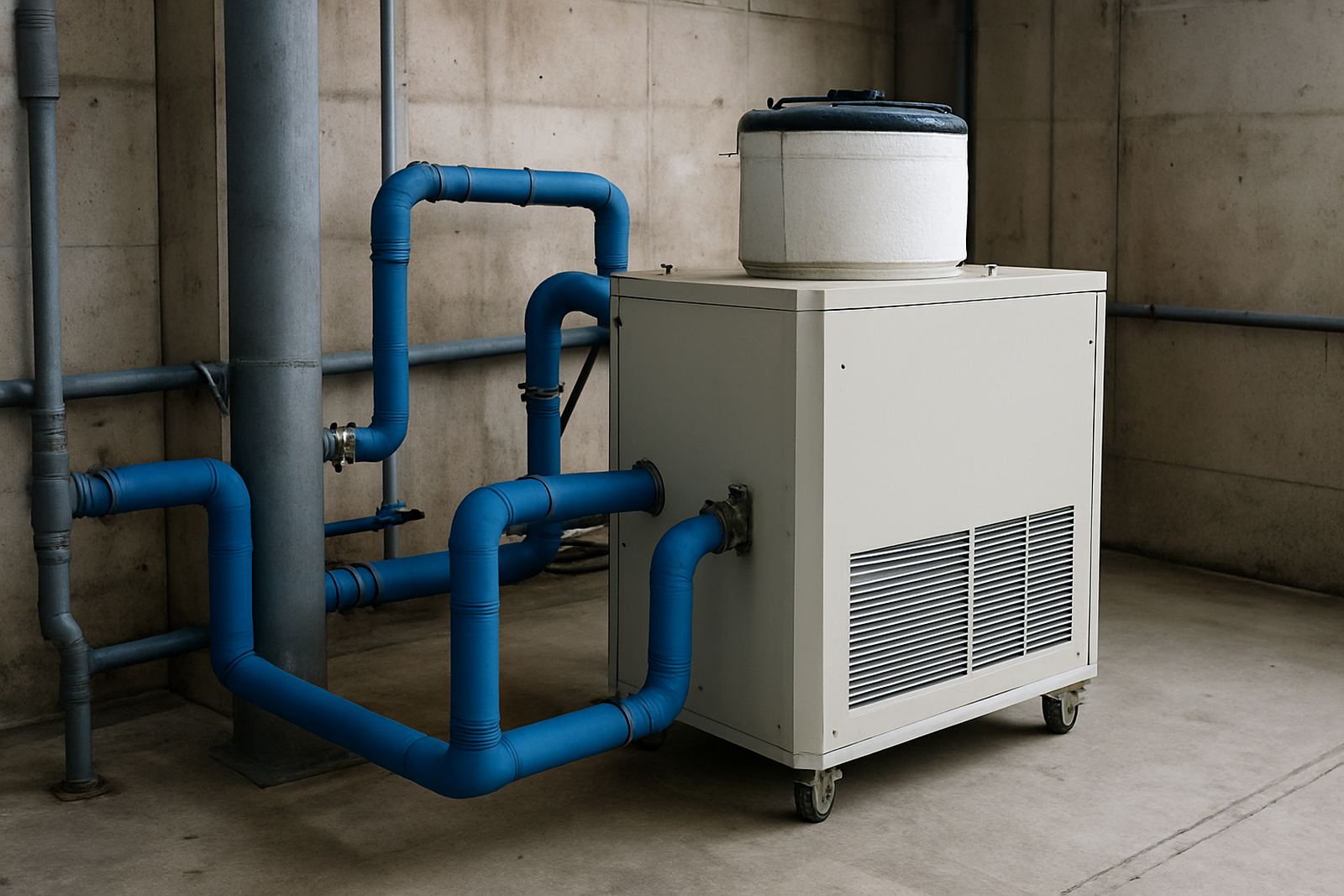
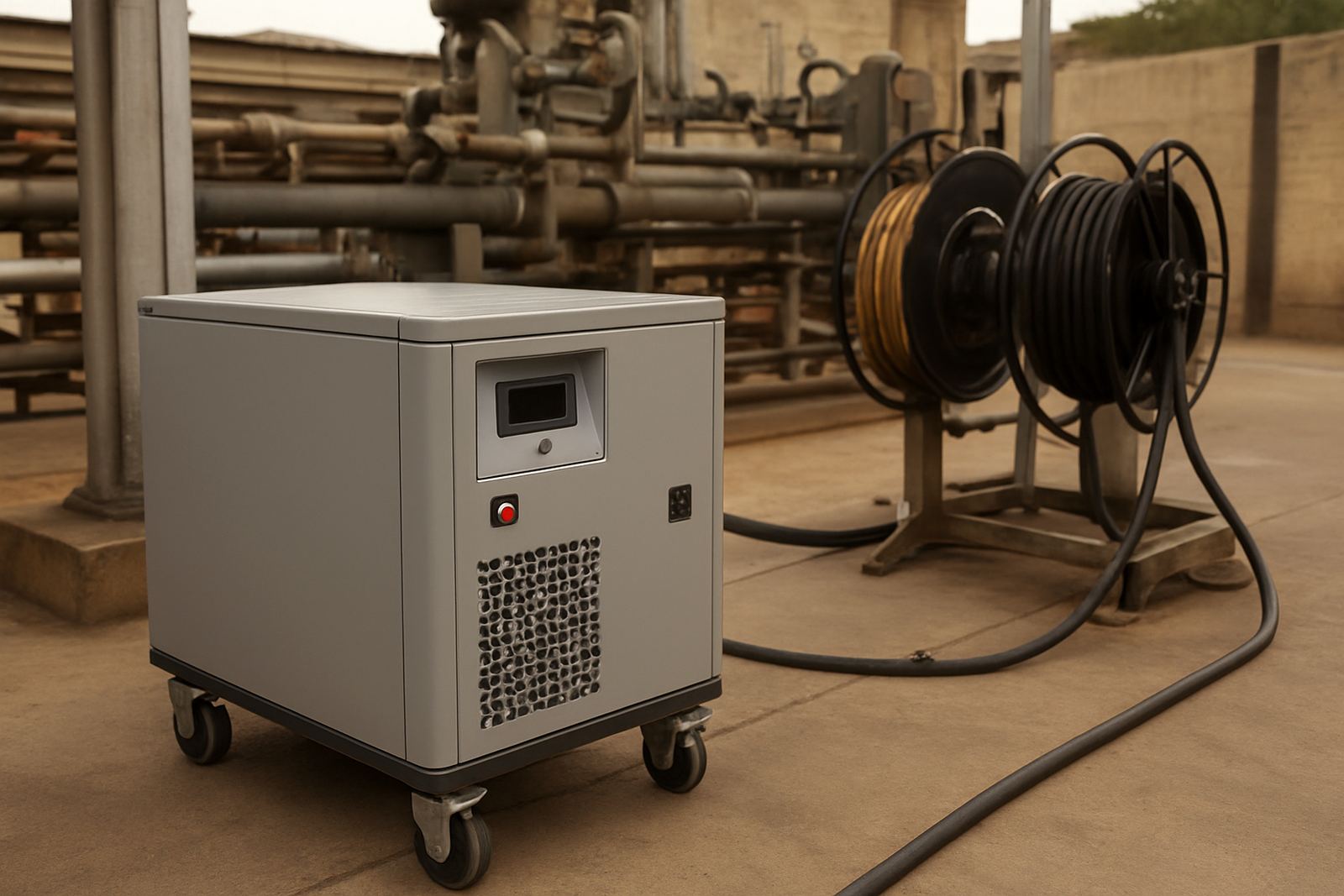
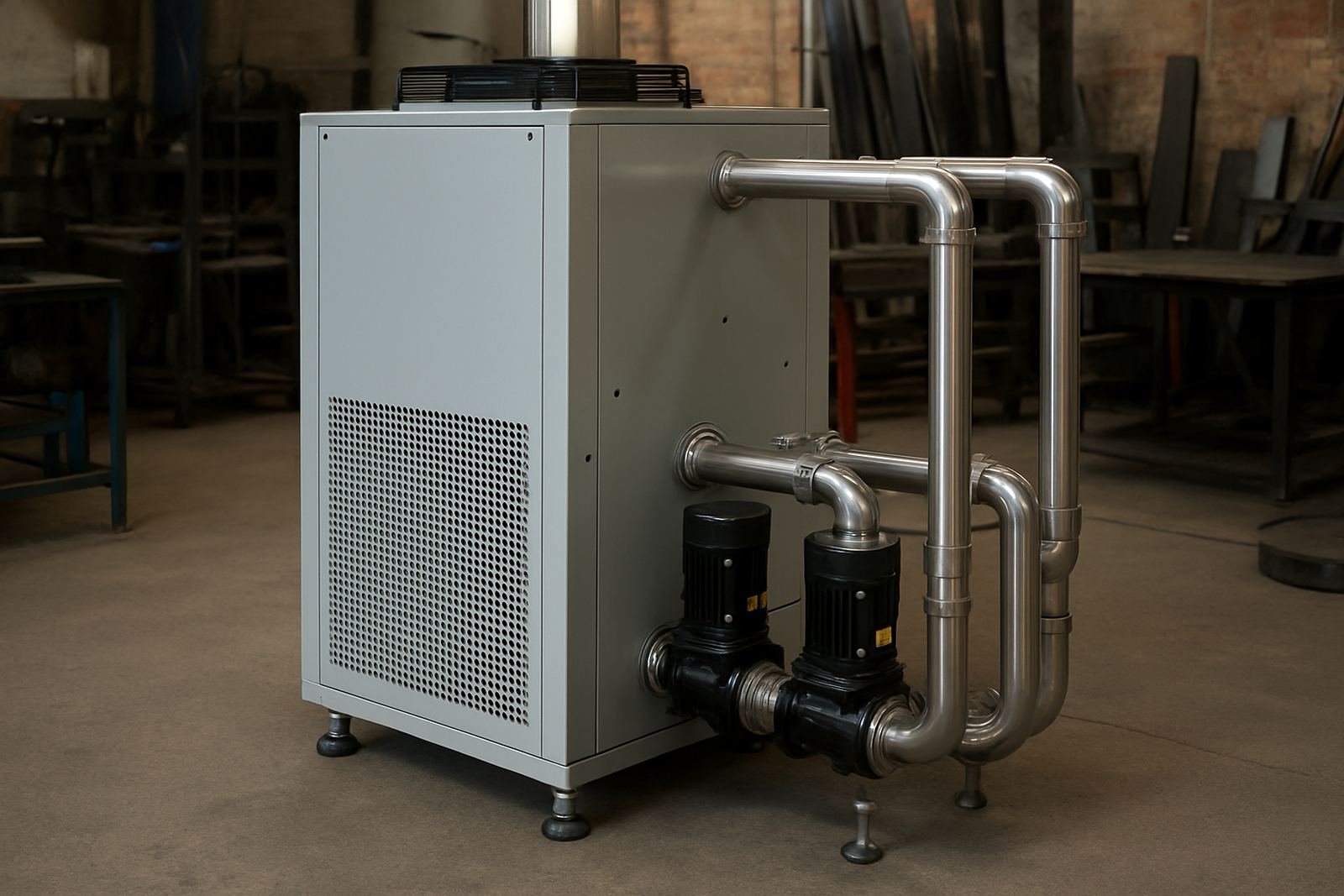
Typical options include air-cooled or water-cooled chillers, single or dual pump arrangements, insulated chilled water tanks, variable flow control and remote monitoring. Some plants need close temperature control for sensitive ingredients, while others need fast pull-down after clean-in-place cycles or product changeovers. We can also supply temporary cooling where production cannot stop during repairs or upgrades.
- Chiller capacities sized to your actual heat load and duty cycle
- Temperature control for chilled water or process glycol where needed
- Indoor or outdoor installation, depending on space and ventilation
- Single or multi-circuit systems for line separation or backup
- Options for stainless steel contact points where hygiene requirements apply
When space is tight, the layout matters as much as the capacity. Our team looks at access for cleaning, pipe runs, service clearances and whether the plant floor can handle the base frame and tank weight.
Where this chiller suits food operations
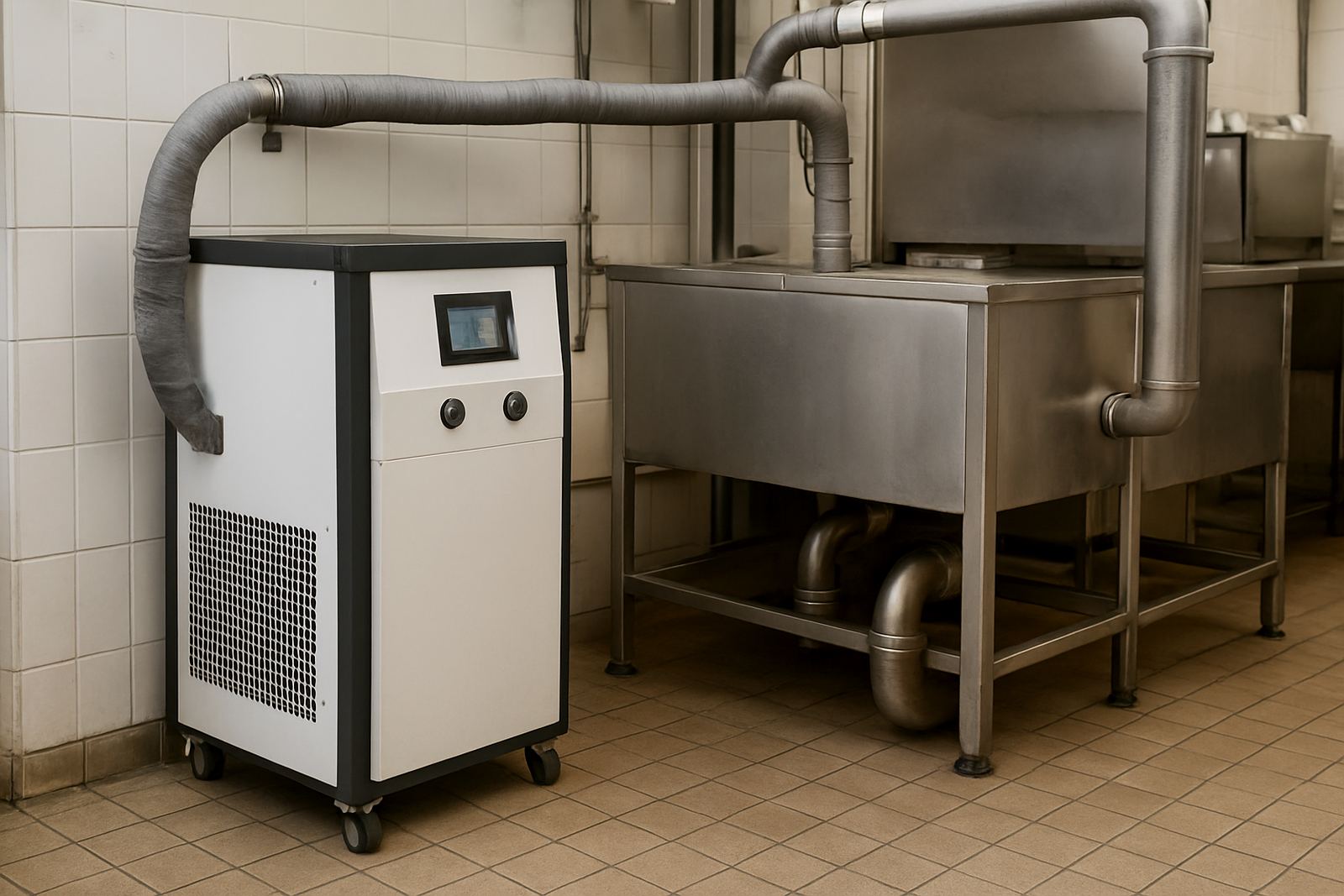
This product suits food businesses that need stable cooling at the point of use. It is commonly applied in processing rooms, utility areas, packhouses and cold prep sections where temperature drift can cause wasted product or production stoppages. For plants in Johannesburg, Pretoria, Cape Town, Rustenburg and coastal areas like Durban, the environmental conditions are different, so the installation must be planned accordingly.
It is a practical choice for applications such as:
- Dairy cooling on mixers, heat exchangers and pasteurising support circuits
- Beverage lines that need controlled fill or syrup temperatures
- Bread, pastry and confectionery processes where cooling affects finish and set time
- Meat and poultry plants with washdown areas and changing process loads
- Sauces, condiments and prepared foods that must stay within a narrow range
Coastal humidity can place extra load on electrical panels and increase corrosion risk on exposed fittings. Inland plants may have dust and higher peak summer temperatures instead. We take those local conditions into account when recommending the unit and its location.
Installation, utilities and site preparation
Installation starts with the required cooling load, available power and pipework route. Most units need a suitable three phase electrical supply, correct breaker sizing and enough space around the condenser for airflow. If the plant uses process water that is hard or carries debris, filtration and water treatment checks should be part of the design from the start.
Before commissioning, the installer should confirm the following:
- Electrical supply voltage and phase are suitable for the selected unit
- Water flow rate matches the equipment requirement
- Pipe diameters and lengths will not create excessive pressure drop
- Drainage is available for maintenance and cleaning
- The floor or plinth can handle the mass of the chiller and water tank
- Access is available for service, coil cleaning and pump replacement
Some sites also need pipework retrofits, control panel upgrades or temporary cooling during shutdowns. Raynen handles these kinds of changes for food plants that cannot afford long downtime. If the process uses special temperatures or a mix of duties, we can design the system around that rather than forcing a standard arrangement onto the line.
Power use, heat rejection and operating conditions
A food process chiller should be selected for reliable running under South African conditions, not only for rated output on paper. In hot weather, condenser performance can change, and during summer afternoons in places like Alberton or Pretoria, the unit may work harder than expected. Good airflow, clean coils and correct refrigerant settings all affect running cost and output.
Air-cooled models are often easier to install where water supply is limited, while water-cooled systems can suit larger plants with cooling tower infrastructure. The best choice depends on power cost, maintenance access and the nature of the process. Where plants run through long shifts or night production, standby planning is also important. A single failed pump or blocked strainer can stop the line fast, so spare parts and service access matter.
Some installations benefit from operator training so the team knows the normal readings, alarm points and cleaning routine. That helps catch small issues before they become a breakdown. It also reduces unnecessary call-outs when a fault is actually a blocked filter, low flow or an isolated control setting.
Care, servicing and what to check before ordering
Food processing equipment benefits from regular maintenance because scale, dirt and temperature drift build up slowly. A chiller that is neglected can still run, but it may do so at a higher cost and with less stable cooling. Preventative maintenance helps protect compressors, pumps, fans, controls and the water side components.
Regular care normally includes coil cleaning, refrigerant pressure checks, electrical inspection, filter cleaning, pump seal checks and water quality testing. In food environments, the system should also be checked for hygiene related concerns, especially where splash, washdown or condensate can reach pipework and panels. If the process fluid is not treated properly, corrosion or fouling can shorten equipment life.
Before ordering, it helps to have the following details ready:
- Required cooling temperature and acceptable variation
- Process flow rate and duty hours per day
- Heat source or equipment being cooled
- Available power supply and space constraints
- Indoor or outdoor location, including ambient temperature
- Whether a temporary or permanent solution is needed
Also confirm whether your site needs commissioning support, spare parts, or future expansion room. A plant that grows by adding lines later needs a chiller arrangement that can be expanded without replacing everything. That saves cost and avoids rework later on.
Supplying food process chillers from Alrode to national sites
Raynen is based in Alrode, Alberton and supports food production sites across South Africa through our service areas in Johannesburg, Pretoria, Durban, Cape Town and Rustenburg, with additional support in Germiston and Boksburg. Our team handles installation, commissioning, maintenance and repair work for industrial cooling systems used in production environments.
Our approach is practical: size the chiller properly, install it neatly, keep the water side clean and make sure the plant team knows how to use it. That is the difference between a unit that looks fine and one that keeps a food line stable through long shifts. If you need a food process chiller for a new line, an upgrade or a replacement, use the enquiry form on our contact page and we will help you check the right option.
Key facts
| Product type | Industrial food process water chiller |
|---|---|
| Cooling range | Typically set for 2 °C to 15 °C process water |
| Capacity range | Sized to suit small lines through to high load multi-line plants |
| Construction | Industrial frame, insulated tank option, pump and controls |
| Electrical supply | Three phase supply, sized to site and unit selection |
| Typical applications | Dairy, beverage, bakery, meat, sauces and packaged foods |