How a Dual Circuit Chiller Works on Site
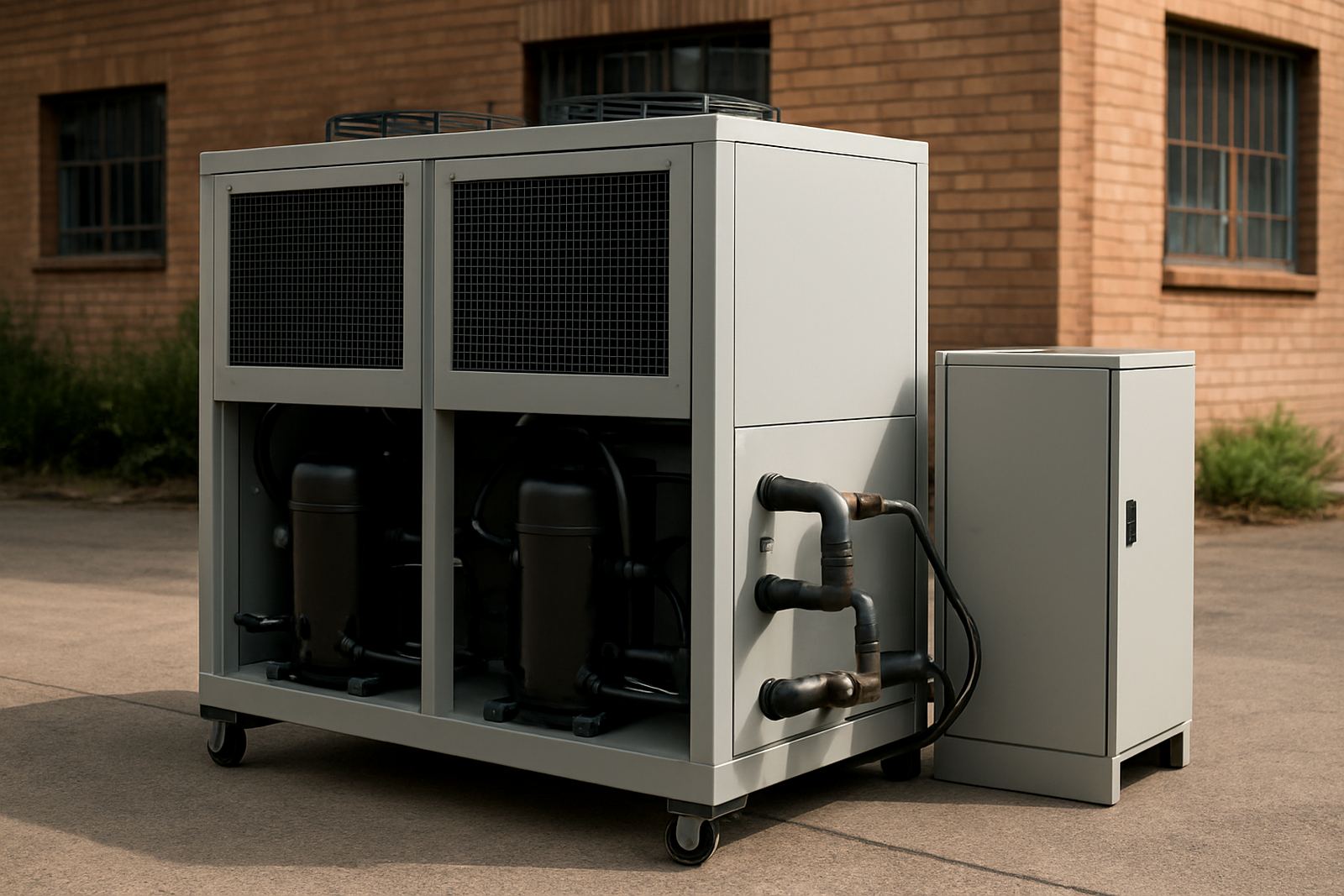
A dual circuit chiller is built with two independent refrigerant and water cooling circuits inside one frame. That means one circuit can carry the main load while the second circuit supports peak demand or runs a separate process loop. In practice, it gives you more control over temperature stability and a better chance of keeping production moving if one circuit needs attention.
For South African factories this matters on lines that cannot afford warm water drift, especially where cycle times are tight and product quality depends on repeatable cooling. It is also useful where one process needs a lower set point than another, because the circuits can be arranged to suit the duty rather than forcing everything through one temperature band.
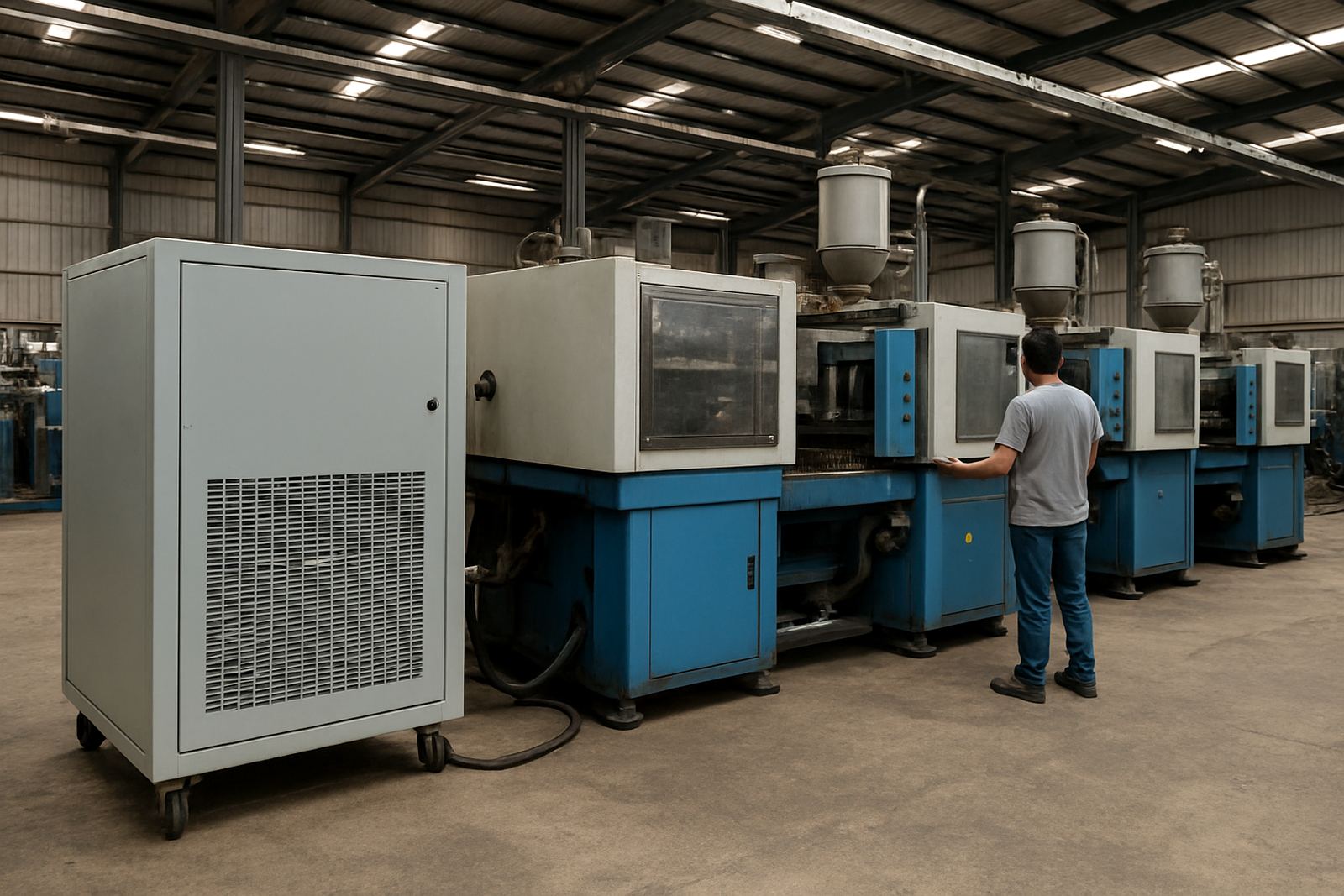
At our base in Alrode, Alberton, we supply and service dual circuit chillers for sites in Johannesburg, Pretoria, Durban, Cape Town, Rustenburg and nearby industrial areas. That includes plants working with laser cutting, injection moulding, extrusion, chemical blending and other process lines that need steady chilled water and proper monitoring.
Typical Sizes, Capacities and Configuration Options
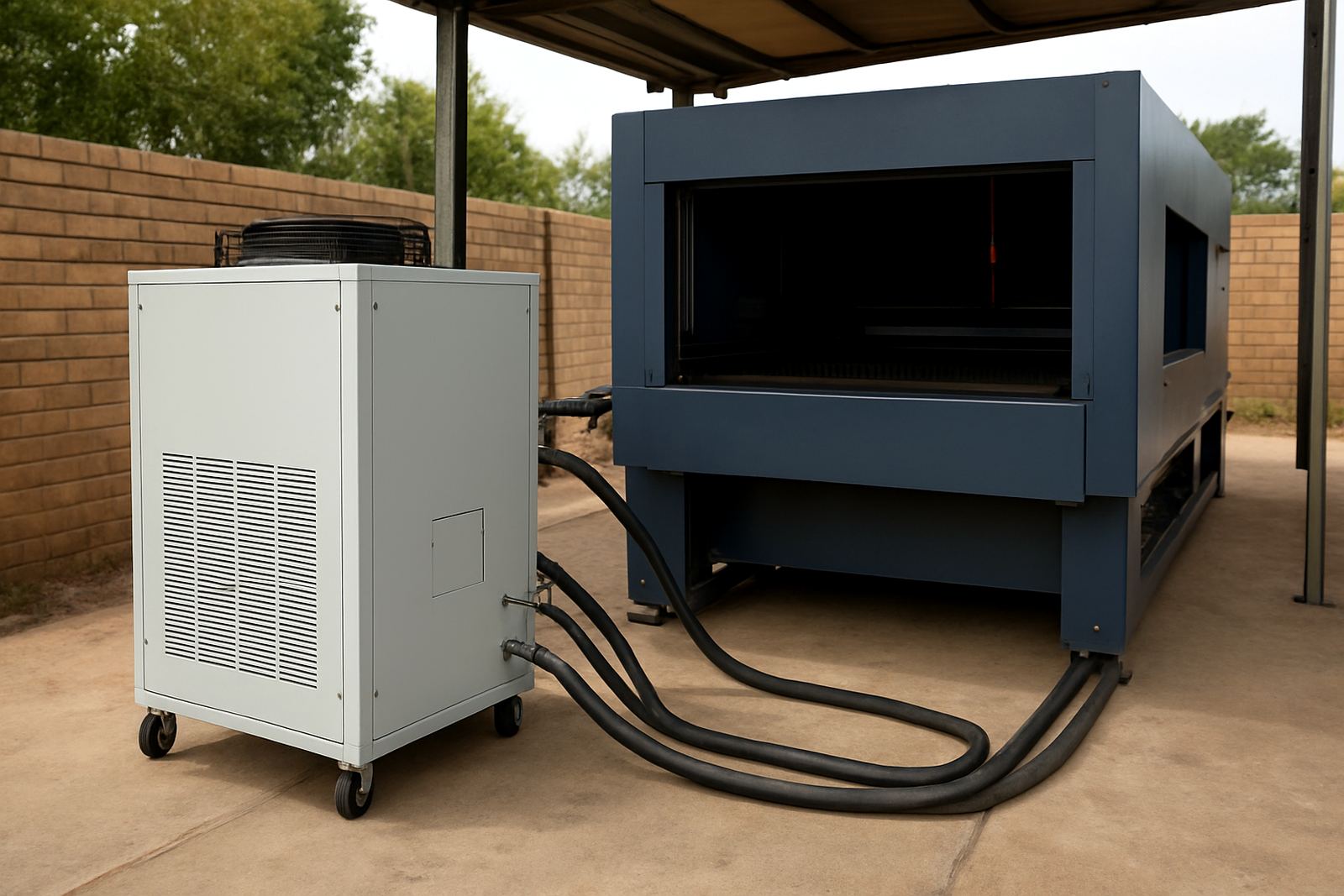
Dual circuit chillers are selected by load, ambient conditions and the level of redundancy you want. Smaller units may suit compact laser rooms or single moulding machines, while larger skid-mounted systems are used for multi-machine production floors, warehouses and outdoor plant areas. We size units against real duty conditions, not just nameplate figures, because a chiller that looks fine on paper can struggle in a hot Durban summer or a dusty inland plant.
- Cooling capacity options from smaller workshop units up to heavy industrial packages
- Single temperature or dual temperature set-up depending on the process
- Air-cooled or water-cooled arrangement based on site utilities
- Built-in pumps or external pumping set-ups for longer pipe runs
- Tank volumes selected for buffer time, process stability and start-stop control
- Stainless steel or coated water sections for better corrosion resistance
For coastal sites we often recommend better corrosion protection and tighter maintenance intervals. In humid areas, salt air and poor ventilation can shorten equipment life if the frame, coils and control cabinet are not suited to the environment.
Where Dual Circuit Cooling Fits Best
This type of chiller suits operations where one machine or process cannot afford a full stop. It is particularly useful when production needs a standby circuit, a split load arrangement or a separate loop for a second machine. It also helps where the cooling demand changes through the day, as the circuits can be staged to match the load instead of overworking one compressor set.
Common applications include:
- Laser equipment that needs stable water temperature for optics and power units
- Mould cooling where cycle time and part finish depend on accurate temperature control
- Process lines with changing heat loads during production shifts
- Test benches, mixing systems and wash systems that need repeatable chilled water
- Factories that want continuity if one circuit needs service or inspection
For many sites in Gauteng, the value is not only cooling capacity but continuity. If a line stops because coolant temperature runs away, the cost is often far higher than the chiller service itself.
Installation, Power Supply and Site Requirements
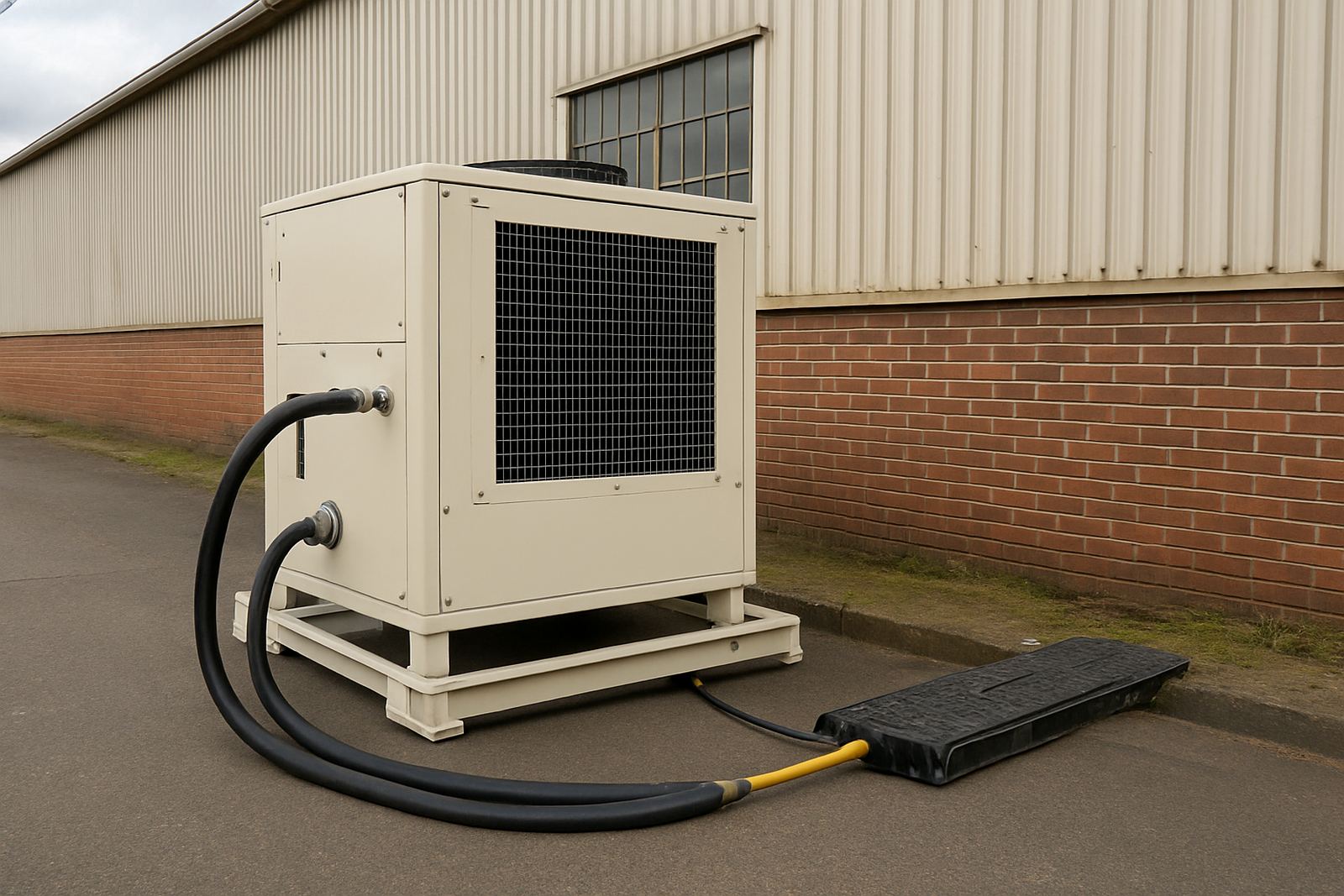
Installing a dual circuit chiller starts with the water route, electrical supply and access for maintenance. The unit needs clear space around air-cooled condensers or room for condenser water equipment if it is a water-cooled installation. Pipework should be kept as short and direct as possible, with proper isolation valves, strainers and drain points. If the pipes are undersized or badly routed, the chiller will work harder and the pumps can wear out early.
Electrical supply needs to match the actual starting current and operating load. On some sites we find weak cabling, poor changeover arrangements or unstable supply during load-shedding. That can trip controls or damage components, so the installation should include proper protection, phase monitoring and a sensible restart sequence. If your plant uses backup power, the chiller must be checked against generator capacity and start-up load, not only running amperage.
- Level base or suitable plinth for vibration control
- Access for hose replacement, filter cleaning and panel checks
- Ventilation for hot plant rooms and enclosed spaces
- Water treatment plan where scale, algae or corrosion is a risk
- Changeover or bypass arrangement if temporary cooling is needed
Care, Maintenance and Breakdown Support
A dual circuit chiller still needs regular care, even if one circuit can carry the load on its own for a short time. The main tasks are checking water quality, cleaning strainers, confirming refrigerant performance, testing pumps and checking control settings. In dusty factory areas around Alberton, Germiston and Boksburg, dirty coils and blocked filters are common causes of poor performance. In coastal areas, corrosion and damp electrical enclosures need close attention.
Preventative maintenance should include temperature checks, pressure readings, fan inspection, pump condition, leak checks and a review of alarms. We also recommend periodic refrigeration repairs, control panel checks and water treatment reviews where the system is working hard or the water is being topped up often. A small issue can turn into a long shutdown if the unit is left until it fails under load.
Our team handles chiller installation, system commissioning, preventative maintenance, breakdown repairs, pump replacements, pipework retrofits, control panel upgrades, cooling audits, temporary cooling and operator training. That support is available through our branches and service areas in Alberton, Johannesburg, Pretoria, Durban, Cape Town, Rustenburg, Germiston and Boksburg.
What to Confirm Before You Order
Before choosing a dual circuit chiller, it helps to collect a few site details so the unit matches the job first time. A chiller that is too small, or not set up for the actual process, can lead to unstable temperatures, more service calls and wasted power. If you are replacing older equipment, send the current operating data as well as the machine nameplate details.
- Required cooling load in kW or tons of refrigeration
- Process temperature range and allowable fluctuation
- Water flow rate and pipe sizes on the existing system
- Ambient temperature at the installation point
- Whether the site needs air-cooled or water-cooled equipment
- Power supply details, including backup generator or inverter use
- Any special needs such as stainless steel parts, low-noise operation or temporary cooling
If you are unsure, our technical sales and projects team can help assess the load and practical constraints before the order is placed. That often saves time on installation and avoids mismatched equipment. It also helps us plan around your production hours so the switchover is less disruptive.
Why Raynen Is a Good Fit for Dual Circuit Projects
Raynen has been working with industrial water chillers and cooling units since 2008, with a strong focus on practical support for South African industry. Our team includes Riaan van der Merwe, Lerato Mokoena, Sibusiso Dlamini, Anika Naidoo, Pieter Joubert, Nomsa Khumalo and Thabo Maseko, so your project is handled by people who understand the workshop, the site and the service side of the job.
We are based in Alrode, Alberton, and support customers across Johannesburg, Pretoria, Durban, Cape Town and Rustenburg through our service areas in Alberton Depot, Johannesburg Service, Pretoria Service, Durban Service, Cape Town Service, Rustenburg Service, Germiston Service and Boksburg Service. If you need a dual circuit chiller for lasers, moulds or process lines, the aim is to match the cooling duty properly and keep the equipment running with as little fuss as possible.
Key facts
| Product type | Industrial dual circuit water chiller |
|---|---|
| Cooling circuits | 2 independent cooling circuits |
| Typical applications | Lasers, moulds and process lines |
| Temperature control | Single or dual set point options |
| Power supply | Matched to site supply and generator capacity |
| Construction options | Air-cooled or water-cooled, with corrosion resistant options |