What the Buffer Tank Package does
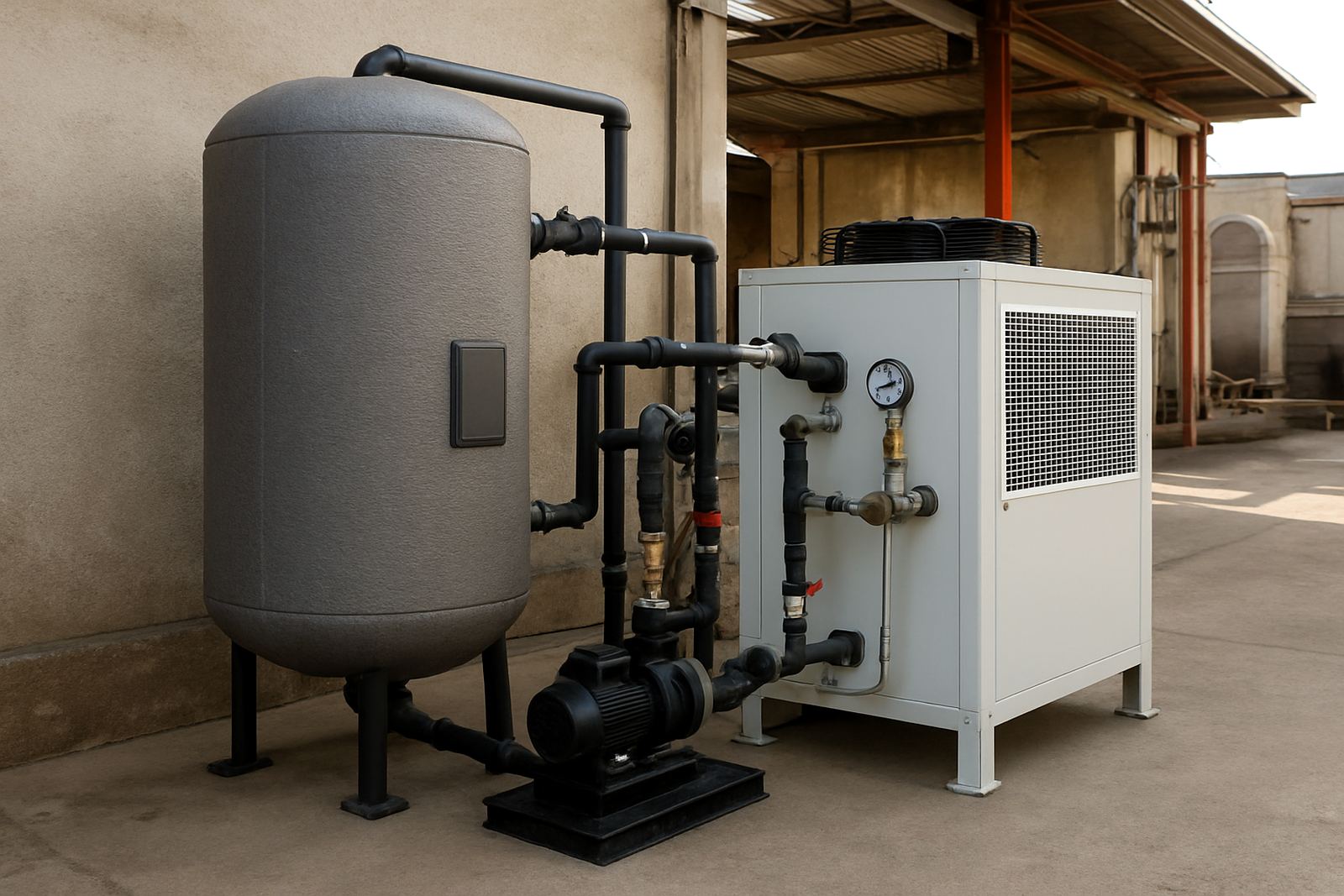
A buffer tank package adds extra water volume to an industrial cooling circuit so the chiller does not react to every small load change. That extra volume helps reduce short cycling, keeps flow steadier, and gives temperature control a more even base to work from.
In simple terms, the tank acts as a stabiliser. When a laser starts and stops, a mould opens and closes, or a process line changes demand, the tank helps absorb the spike instead of letting the chiller chase it. This is useful in South African plants where ambient temperatures can shift a lot between a cool morning and a hot afternoon, especially in Durban and parts of Gauteng in summer.
The package is supplied as a matched tank arrangement for industrial water systems. It is suited to chilled water circuits, process water loops and duty cycles where small systems struggle with repeated starts. A well sized buffer tank can also help reduce nuisance alarms and uneven supply temperatures at the point of use.
Sizes and package options
Buffer tank sizes are selected around the chiller capacity, the total system volume and the type of equipment being cooled. For small laser or mould circuits, a compact tank may be enough. For larger process lines or multiple users on one loop, a bigger tank gives better stability and less temperature swing.
Common package options include vertical or horizontal tank layouts, insulated or uninsulated construction, mild steel or stainless steel tank bodies, and fitted circulation connections for easier integration. Some sites need a basic tank only, while others need a full skid with valves, strainers, level control and temperature instrumentation.
- Compact packages for small machinery rooms and single-machine cooling
- Mid-size packages for moulds and repeat production lines
- Large-volume packages for multi-point process cooling
- Insulated tanks for hotter plant rooms and outdoor exposure
- Stainless steel options for cleaner water circuits or coastal humidity
For coastal plants in Cape Town or Durban, a corrosion-conscious tank finish and neat pipe support matter just as much as size. In steel and manufacturing sites around Alberton, Germiston and Boksburg, access space and floor loading are often the first things to check.
Where it suits in South African industry
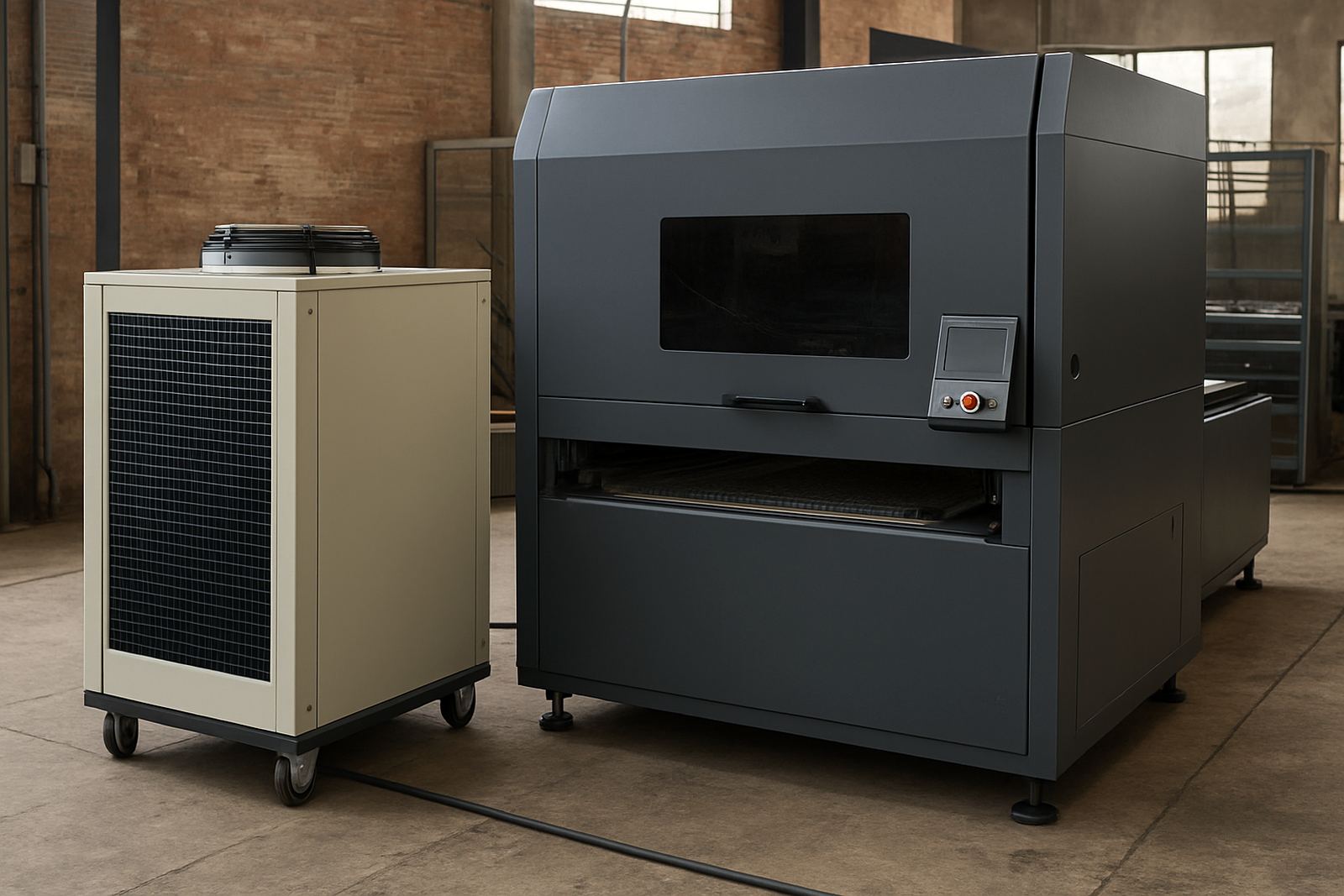
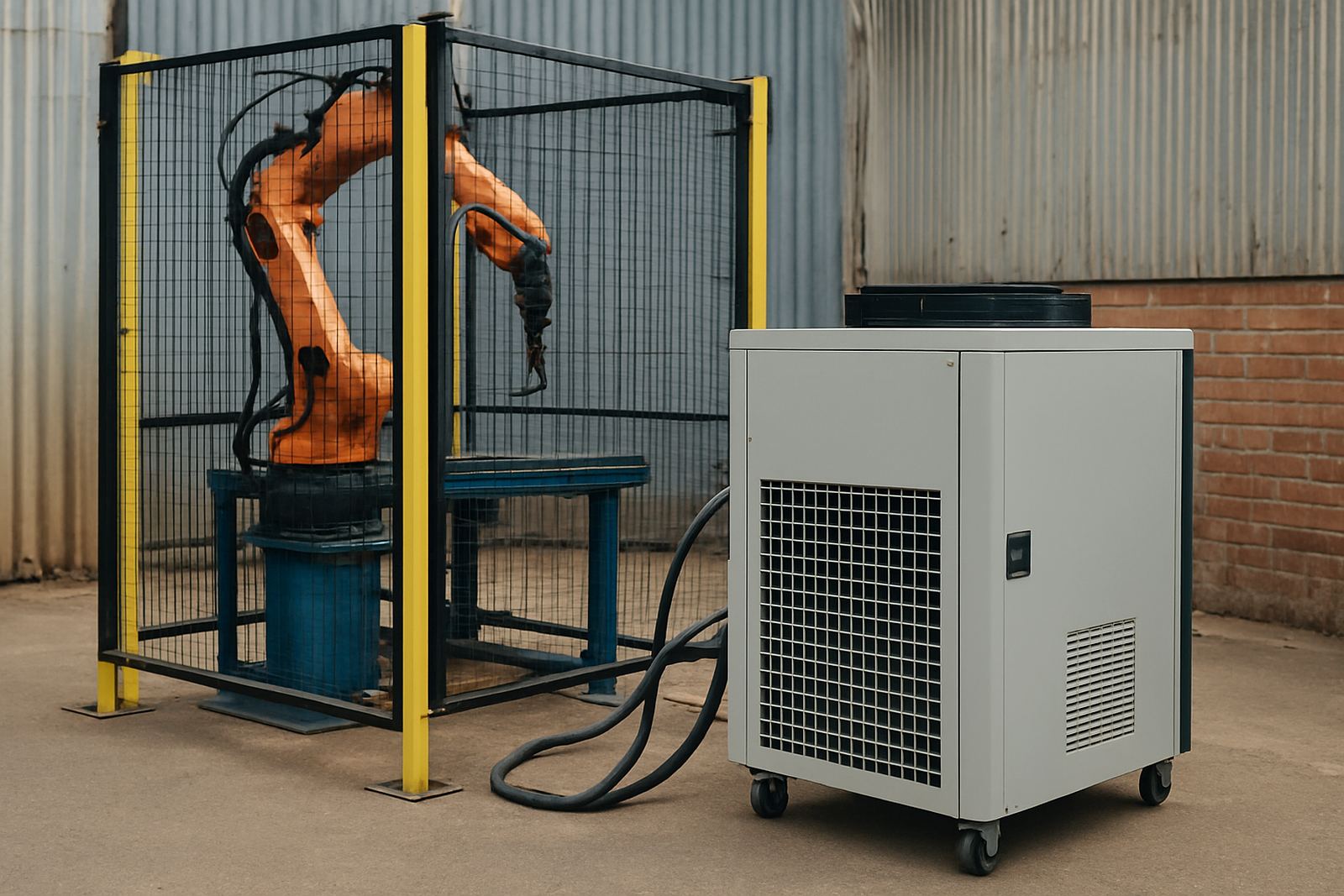
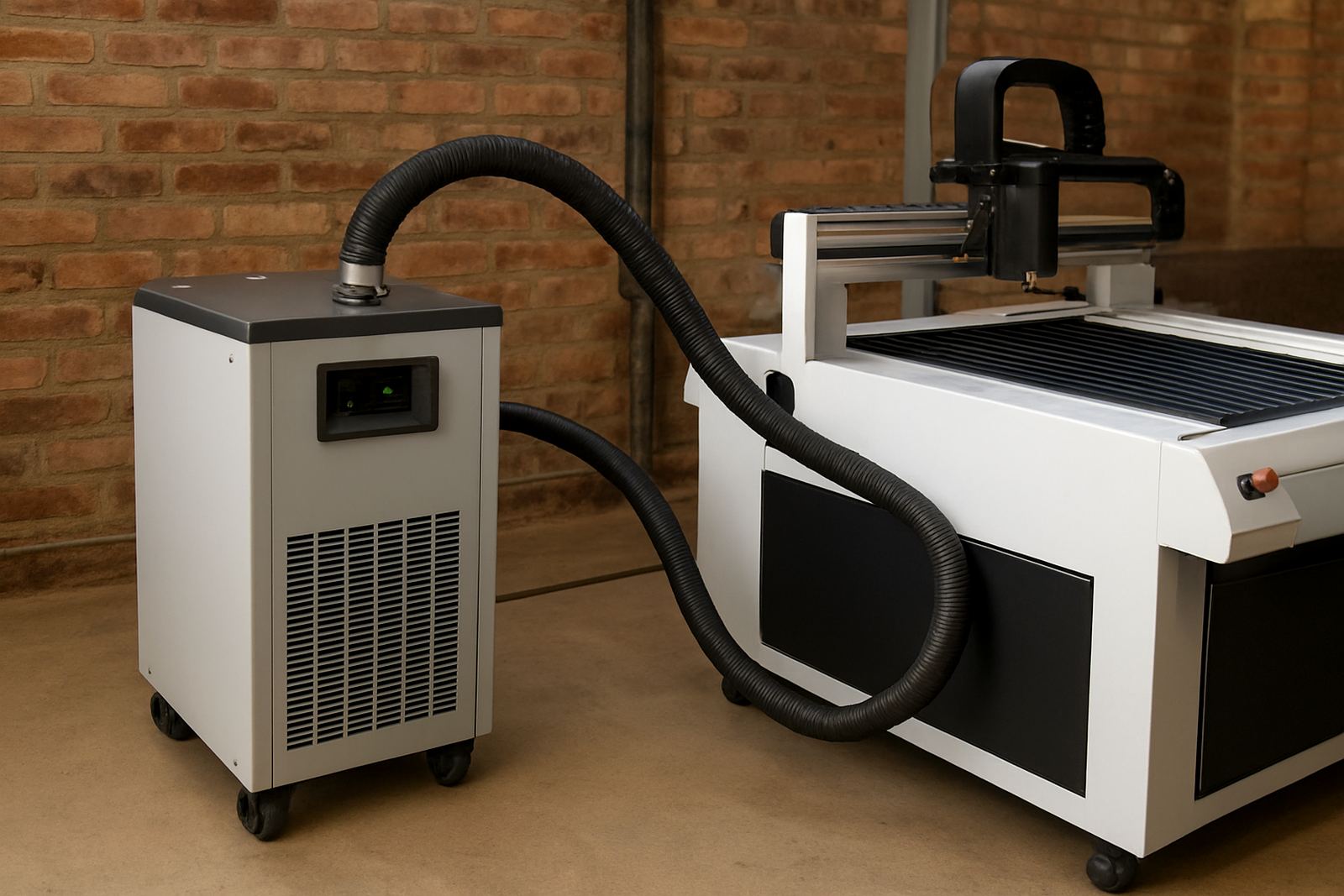
This package suits operations that need a stable return temperature and consistent flow to protect process quality. It is commonly used with laser machines, mould temperature circuits, hydraulic cooling, extrusion lines and general process water systems. It also helps where load changes happen quickly and the chiller needs a steadier buffer to work against.
It is a good fit for plants dealing with load-shedding recovery, because equipment that restarts after an outage can pull unevenly on the system. A buffer tank does not replace proper backup power, but it can help the cooling side recover more evenly once power is restored. On sites with generator supply, the tank also reduces the shock of a sudden restart.
- Laser cutting and marking systems
- Injection moulding and mould cooling loops
- Packaging, plastics and forming lines
- Food and beverage process cooling where suitable water treatment is in place
- General manufacturing plants with variable cooling demand
For central plant rooms in Johannesburg, Pretoria, Rustenburg and across Ekurhuleni, the package can be built into a plant layout that keeps maintenance access clear. That makes day to day work easier for operators and service teams.
Installation and utility needs
Installation usually involves setting the tank on a level base, connecting it into the chilled water circuit, fitting isolation valves and confirming the pump duty matches the system resistance. If the package includes controls or level monitoring, those are wired and tested at commissioning. Pipework should be sized so the tank does not become a restriction in the system.
Electrical needs depend on whether the package includes a circulation pump, level switch or control panel. Most buffer tank packages use standard industrial single-phase or three-phase supply for auxiliaries, while the chiller itself will have its own power requirement. No gas supply is needed for the tank package itself, though the connected chiller or refrigeration plant may still have its own service requirements.
Good installation practice matters. The tank should be positioned where maintenance can reach valves, strainers and instruments without moving other equipment. On busy factory floors, poor access becomes a problem very quickly. We also check whether the site floor can carry the filled weight, because water adds up fast and a full tank is no light load.
Care, servicing and water quality checks
A buffer tank is not complicated, but it still needs regular attention. Water level, air ingress, scale build-up and sludge all affect how well the system performs. If the site has hard water, corrosion risk or mixed metal pipework, water treatment checks should form part of the service plan.
Typical maintenance includes inspection of valves, pump seals, strainers, level devices and insulation condition. On insulated tanks, damaged cladding or wet insulation should be fixed quickly because it affects both efficiency and hygiene. In dusty industrial areas, a quick clean around fittings and sensors can prevent false readings.
- Check water level and top-up requirements during routine rounds
- Inspect for leaks at flanges, unions and drain points
- Flush sediment if the tank has a drain and service access
- Confirm pump operation and flow consistency under load
- Review water treatment records, especially on coastal sites
Raynen can support preventative maintenance, breakdown repairs, pump replacements and water treatment checks where the buffer tank forms part of a wider cooling circuit. That helps keep the full system predictable rather than treating each fault in isolation.
What to confirm before ordering
Before ordering a buffer tank package, it helps to gather the system details properly. The wrong tank size or poor connection arrangement can create new issues instead of solving them. A practical spec sheet makes the selection process quicker and avoids expensive changes later.
Please confirm the chiller capacity, the required flow rate, the operating temperature range, the available footprint and the height available for installation. It also helps to know if the system is serving one machine or several, because shared loops usually need more storage. If the site has special water treatment requirements, that should be stated upfront as well.
- Chiller size and refrigeration duty
- Required litres per minute and total water volume
- Available floor space and access route into plant room
- Preferred tank material and insulation requirement
- Power available for pumps or controls
- Any corrosion, hygiene or outdoor exposure concerns
If you are unsure, an on-site cooling audit is often the fastest way to size the package correctly. Our team in Alberton can assess the circuit, check the piping layout and recommend a package that suits the process rather than forcing a standard answer onto the job.
How Raynen supports the package
We supply and service industrial water chillers and cooling equipment across South Africa, with support into Johannesburg, Pretoria, Durban, Cape Town and Rustenburg. For buffer tank packages, that means we can align the tank, pump and controls with the rest of the cooling circuit so the installation works as one system.
Our team handles chiller installation, system commissioning, preventative maintenance, breakdown repairs, refrigeration repairs, pump replacements, pipework retrofits and control panel upgrades. We also support temporary cooling where a plant needs to stay operational during repairs or changeovers.
Whether the site is a new install or a retrofit, the aim is the same: a stable cooling circuit that is easy to maintain and fit for daily use. If the buffer tank is the missing part of your system, we can help match it correctly to the application.
Key facts
| Product type | Packaged industrial buffer tank for chilled water and process cooling circuits |
|---|---|
| Typical tank options | Vertical or horizontal, insulated or uninsulated, mild steel or stainless steel |
| Common capacities | 250 L to 5,000 L depending on chiller size and process demand |
| Utility requirement | Water circuit connection, optional circulation pump and basic control wiring |
| Use cases | Lasers, moulds, process lines, hydraulic cooling and multi-point cooling loops |
| Service support | Installation, commissioning, maintenance, repairs, audits and water treatment checks |