Industrial chiller installation for South African production sites
Installing a water chiller is not just about setting the unit on the floor and switching it on. The chilled water circuit has to suit the heat load, the pipe runs, the pump duty, the power supply and the space available around the machine. On laser systems, moulding equipment and process lines, poor installation can lead to temperature swings, nuisance trips and shortened component life. Our team sets up cooling equipment so it works properly from day one, with attention to flow rate, return temperature and practical access for future servicing.
We install new industrial chillers for workshops, factories and process plants in Alberton, Johannesburg, Pretoria, Durban, Cape Town and Rustenburg, with support into nearby industrial areas too. Sites near the coast often need extra care for corrosion control and ventilation, while inland plants may need stronger measures for dust and summer heat. We plan for these conditions before the first pipe is cut, because that is where long-term reliability starts.
What is included in the installation scope
Every project begins with a site review so we can confirm space, access, floor loading, power availability and where the chilled water will run. If the unit is being installed on a mezzanine, in a plant room, or outside under a weather cover, we factor that into the layout. We also check whether the application needs clean water, glycol, strainers, isolation valves or bypass arrangements. That saves time later and keeps the system easier to maintain.
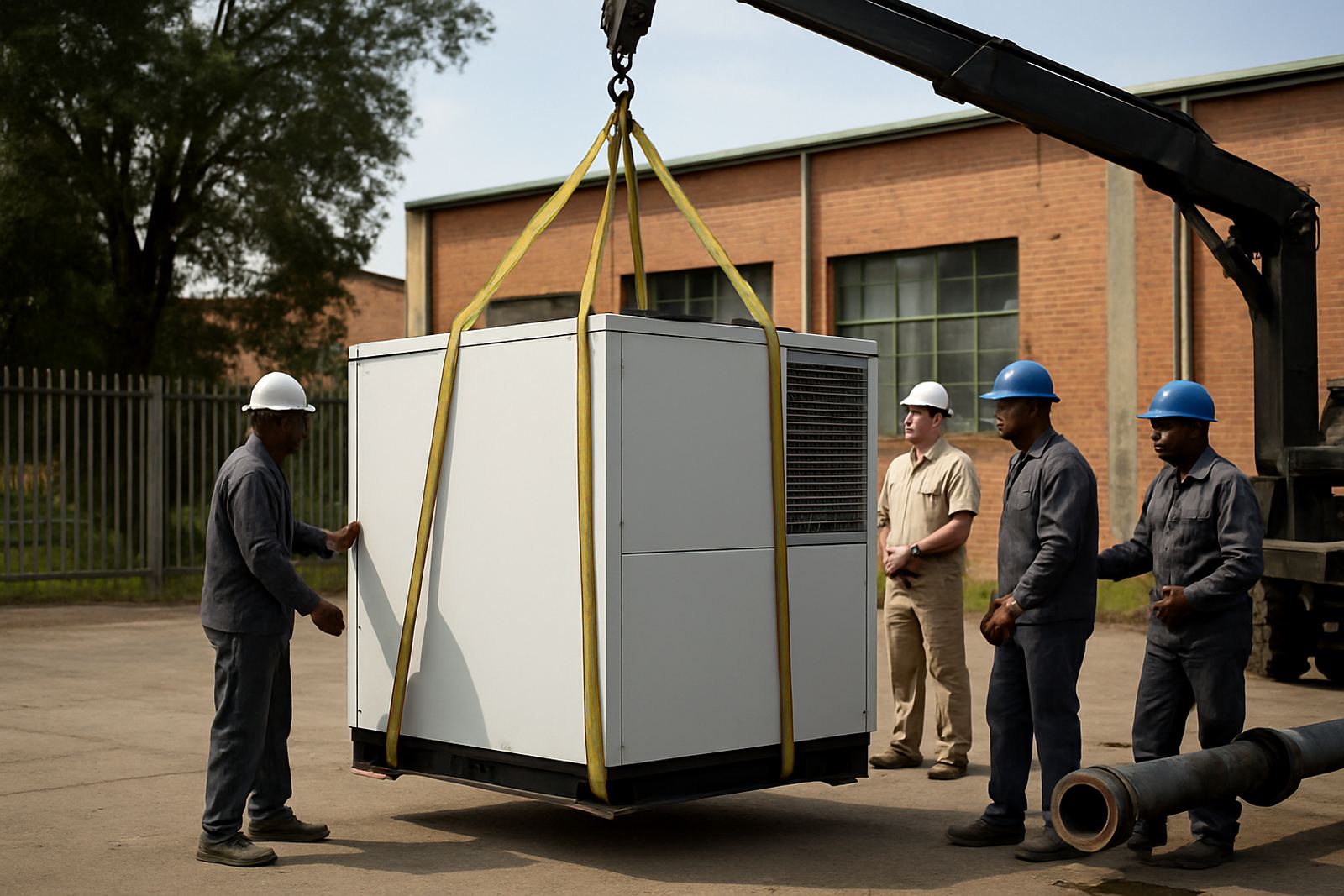
- Positioning and levelling of the chiller or cooling unit
- Connection of chilled water piping and return lines
- Pump alignment and flow verification
- Electrical coordination with the site electrician
- Controller setup, alarms and temperature set points
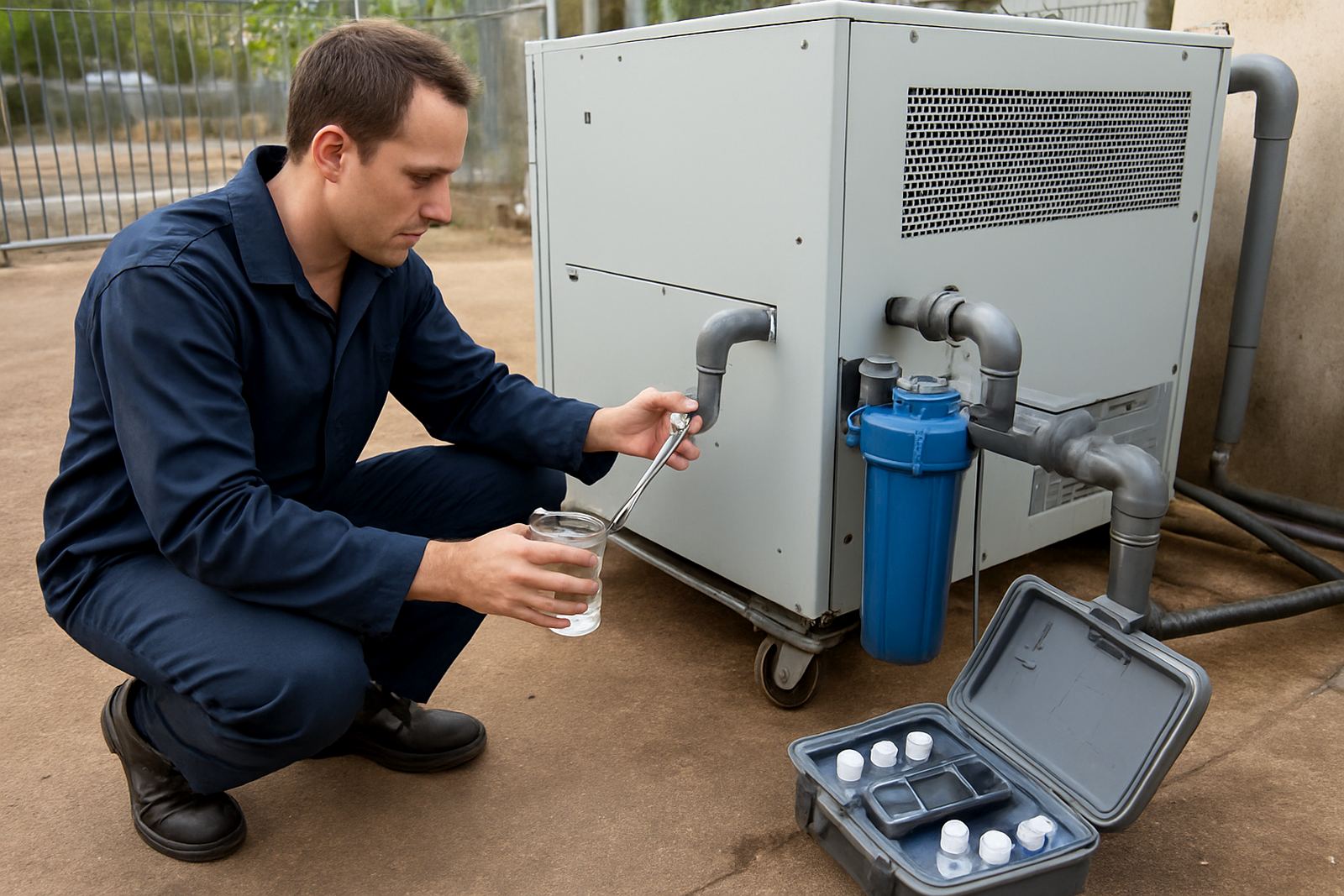
- Pressure testing, flushing and leak checks
- Commissioning and handover testing under load
Where needed, we also advise on pipe insulation, vibration isolation and drain routing. For laser applications, stable temperature control is important for beam consistency. For mould cooling, the aim is predictable cycle times and less scrap. For process lines, steady flow can make the difference between acceptable output and constant stoppages.
Step by step installation process
We keep the process clear so production teams know what will happen and when. First, the project is assessed against the cooling duty and the site conditions. Then we confirm the physical route for the pipework, the electrical point, and any integration with existing equipment. If the chiller is replacing an older unit, we look at how the old system was connected, because many plants have pieced together changes over the years.
- Site assessment and technical review
- Equipment positioning and service clearance check
- Pipework installation or tie-in to existing lines
- Electrical connection by the appointed electrical team
- System flush, pressure test and leak inspection
- Controller programming and alarm checks
- Commissioning under real operating conditions
- Operator handover and basic training
Most standard installations are completed in one to three working days, depending on the size of the plant, the amount of pipework and whether a retrofit is involved. Larger sites or multi-unit cooling setups may take longer, especially where access is limited or municipal water treatment requirements have to be addressed. We plan around shutdown windows where possible, so your line can get back into service without unnecessary delay.
Electrical, piping and utility coordination
A good installation depends on more than mechanical work. The chiller must receive the correct supply, with proper protection, correct cable sizing and suitable isolation. If there are voltage fluctuations or load-shedding risks on site, we can discuss how the cooling system should recover after power loss and what restart sequence is safest for the rest of the plant. In some cases, the controls need a little rework so the system comes back in the right order after an outage.
Piping is just as important. We use sensible layouts that keep pressure loss down and make future maintenance easier. Long pipe runs, sharp bends and undersized piping can reduce flow and create problems that are hard to trace later. We also check for trapped air points, incorrect fall on drainage lines and places where condensation could damage floors or surrounding equipment. In humid coastal areas, good insulation and neat pipe support go a long way.
- Correct pipe sizing for the required flow rate
- Insulation to reduce sweating and heat gain
- Drain and overflow routing where applicable
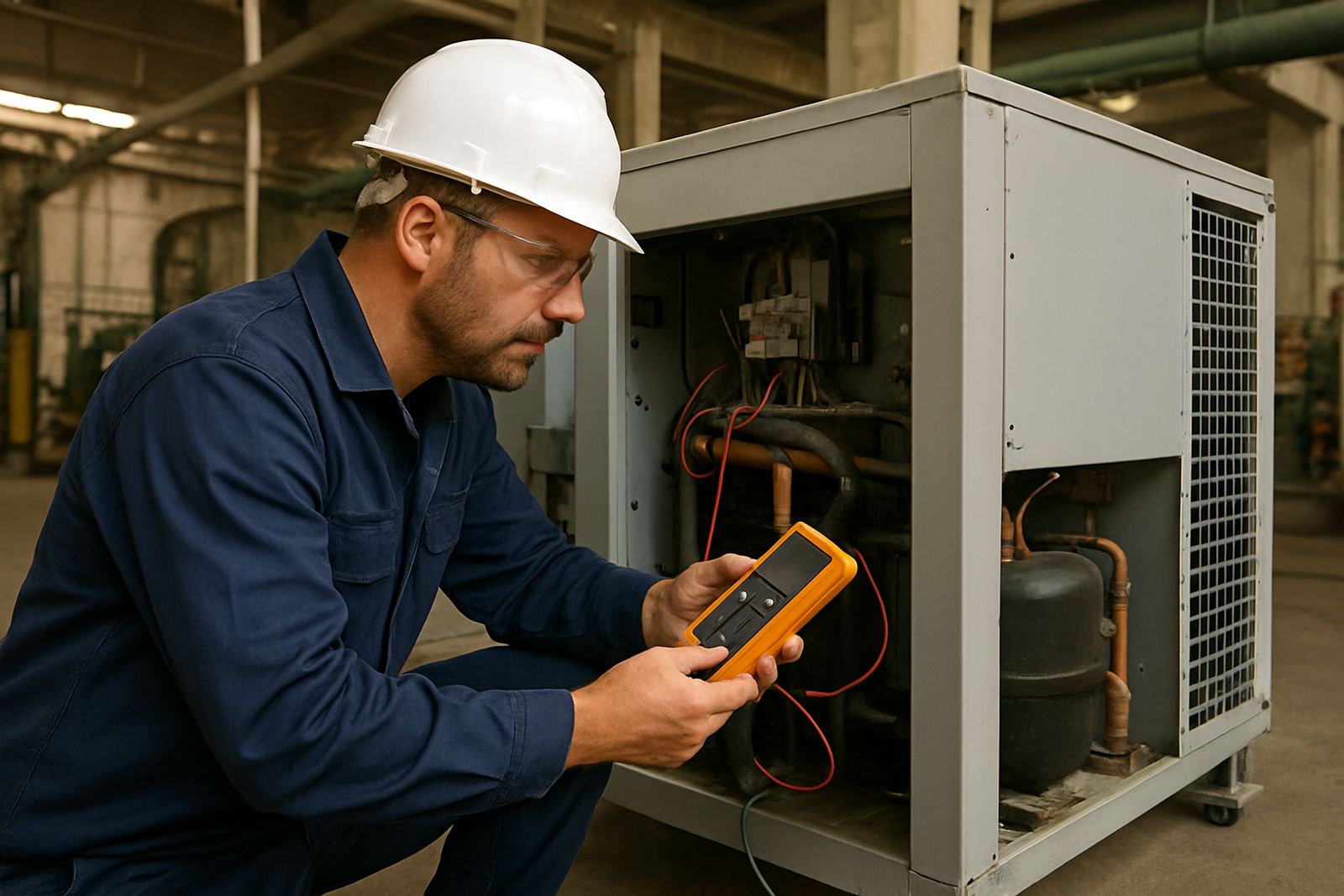
- Electrical isolation and safe start-up checks
- Integration with existing alarms or process interlocks
Commissioning, testing and operator handover
Commissioning is where the installation is proven. We do not leave a site until the unit is circulating water properly, the temperatures are stable and the alarms are understood. During this stage we check pressure, flow, set points and actual process temperature. If the application is a laser, mould or process line, we verify performance while the equipment is under working load, not just idle in a plant room.
We also take the time to train the operators or the maintenance team. That includes startup and shutdown steps, what warning lights mean, how to check filters and what to do if a fault appears. Clear handover prevents unnecessary callouts and helps the plant team respond faster during peak production periods. On some sites we find that a simple setting change or better cleaning routine solves the kind of issue people thought needed a major repair.
At the end of commissioning, we provide a practical summary of the installed system, the operating range and the recommended maintenance interval. This gives the plant team a clear record for future servicing and helps when another shift takes over the equipment.
Pricing approach and maintenance intervals
Installation pricing is based on the size of the chiller, the complexity of the pipework, the electrical work required and the time needed for commissioning. A straight swap on an easy-access site will cost less than a full new install with longer pipe runs, roof work or plant room modifications. We price transparently, so you can see what is included and where any extras may apply. That may include specialised fittings, out-of-hours work, crane lifting, glycol charging or extra insulation.
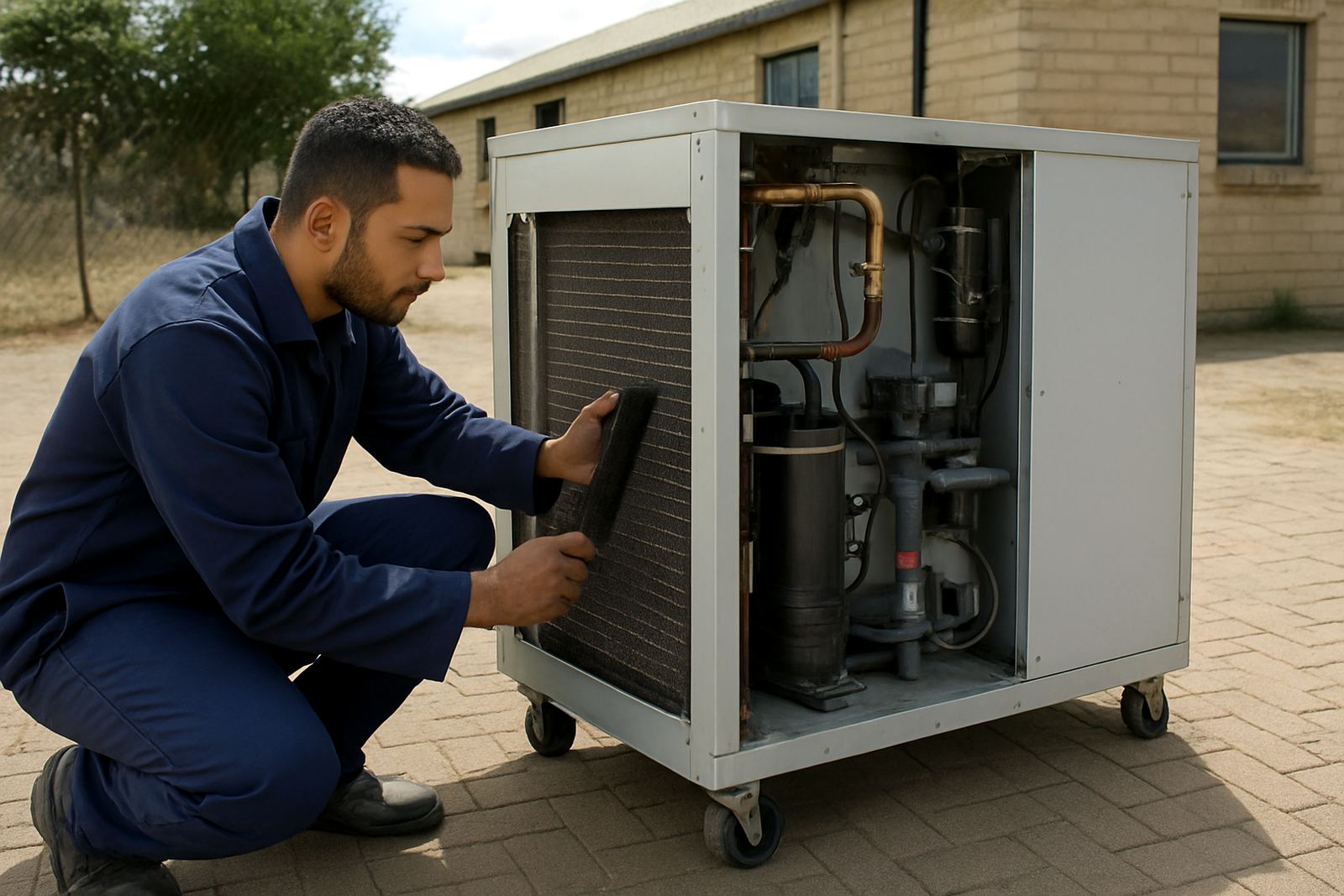
For most industrial sites, we recommend a maintenance interval of every 3 to 6 months, depending on dust levels, ambient temperature, water quality and running hours. Coastal sites, 24 hour plants and systems supporting sensitive processes may need more frequent checks. A good service interval helps keep coil surfaces clean, pumps healthy and control settings accurate. It also gives early warning of leaks, scaling, blocked strainers or refrigerant side issues before they become expensive downtime.
We can also advise on temporary cooling options if your current unit has failed and production cannot stop. In that case, the installation team can work alongside temporary equipment so the plant keeps moving while permanent changes are completed.
Key facts
| Service type | Industrial chiller installation for lasers, moulds and process lines |
|---|---|
| Typical turnaround | 1 to 3 working days for standard installations, longer for larger or retrofit projects |
| Capacity range | Sized to match site duty, flow rate and process temperature requirements |
| Temperature control | Stable chilled water delivery with set point adjustment during commissioning |
| Install support areas | Alberton, Johannesburg, Pretoria, Durban, Cape Town and Rustenburg |
| Maintenance interval | Every 3 to 6 months, depending on site conditions and operating hours |