1. Confirm Why You Need Temporary Cooling
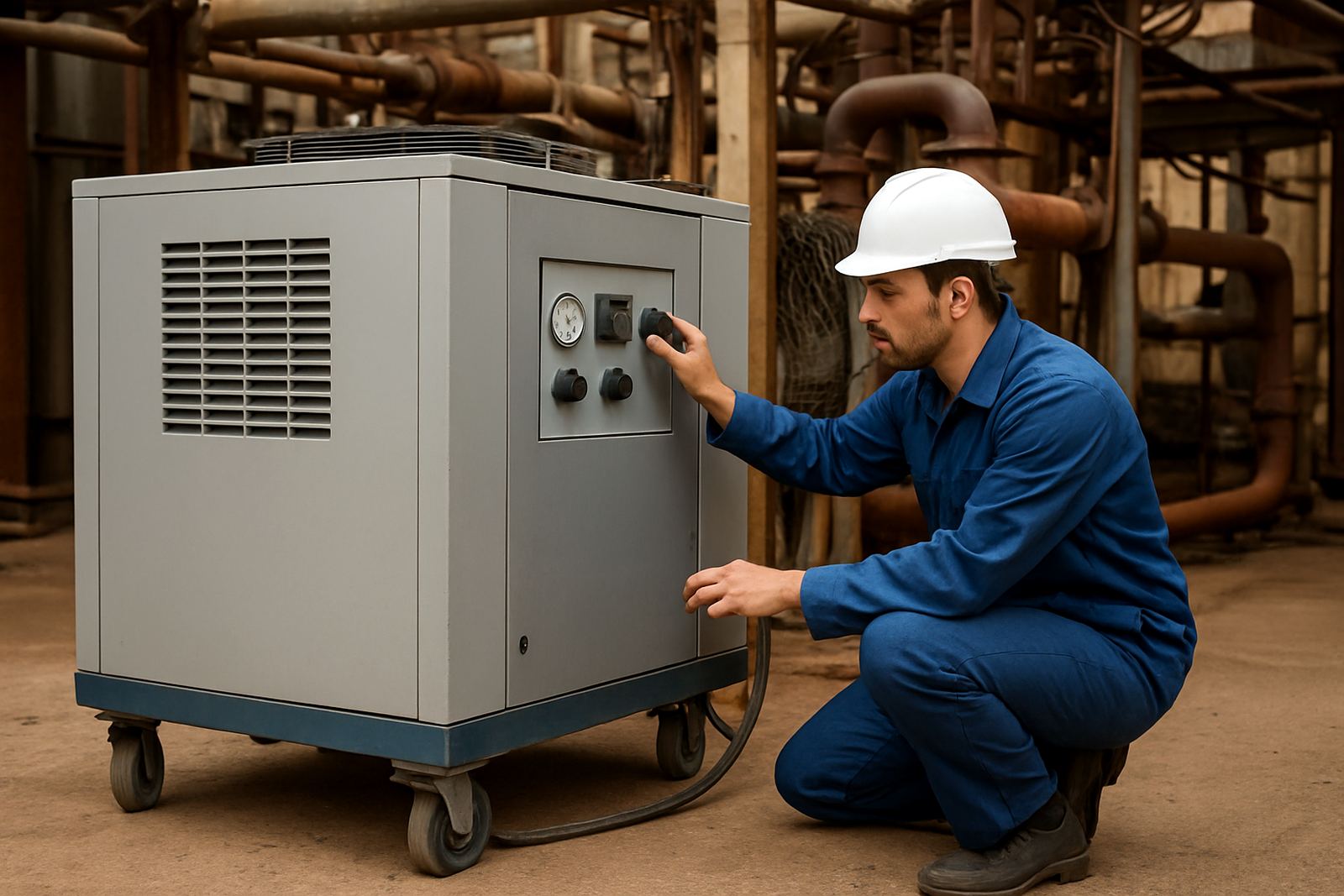
Start by defining the reason for the temporary setup. A laser line may need tight temperature control to protect cut quality, while moulding and process lines may only need stable cooling during a planned shutdown or a failed chiller repair. The clearer the brief, the better the temporary unit can be sized and connected.
Before any equipment arrives, note the process load, target water temperature, flow rate and how long the temporary arrangement must run. If the site is in Gauteng, Durban or the Cape, remember that summer heat, coastal humidity and load shedding can all change the cooling duty. A unit that looks big enough on paper may still struggle if the plant room is hot or poorly ventilated.
- State the process being cooled and the machine it serves
- Confirm desired supply temperature and allowable range
- Estimate run time, from a few hours to several weeks
- Check whether the backup is for full load or partial load only
2. Check Power Supply and Site Readiness
Temporary cooling equipment is only as reliable as the power feeding it. Check the available supply voltage, breaker size and cable route before the unit is moved on site. If the site depends on generators during outages, the cooling load must be included in the generator calculation, not added later as an afterthought.
Make sure the setup point has enough clearance for airflow, maintenance access and hose connections. In tight Alrode yards or busy factory floors in Johannesburg and Pretoria, this often means moving the unit closer to the process than planned, or arranging a safer route around forklifts and foot traffic. The floor must be level, with drainage or spill control nearby if water is lost during changeover.
- Verify power availability and spare capacity
- Confirm generator support if load shedding is a risk
- Check access for loading, lifting and positioning
- Keep the unit clear of dust, steam and hot exhaust air
3. Map Hoses, Isolation Points and Bypasses
Hoses are often where temporary cooling setups go wrong. Measure the run carefully, including bends, doorways and changes in level. Long hose runs can reduce flow and make the temporary unit work harder, so keep the route as short as possible and protect it from vehicle damage, sharp edges and heat sources.
Identify isolation valves, drain points and any bypass arrangement before the old unit is disconnected. If the process cannot stop, a proper bypass lets you keep circulation moving while the permanent system is offline. That can save a mould or laser line from overheating, but only if the connections are clearly marked and tested. A loose clamp or crossed line can cause a mess very fast.
- Measure supply and return hose lengths on site
- Check connection sizes and fitting types
- Plan a bypass if the process must keep running
- Label all hoses, valves and directions of flow
- Protect hoses from crushing, rubbing and heat
4. Set the Right Location for the Temporary Unit
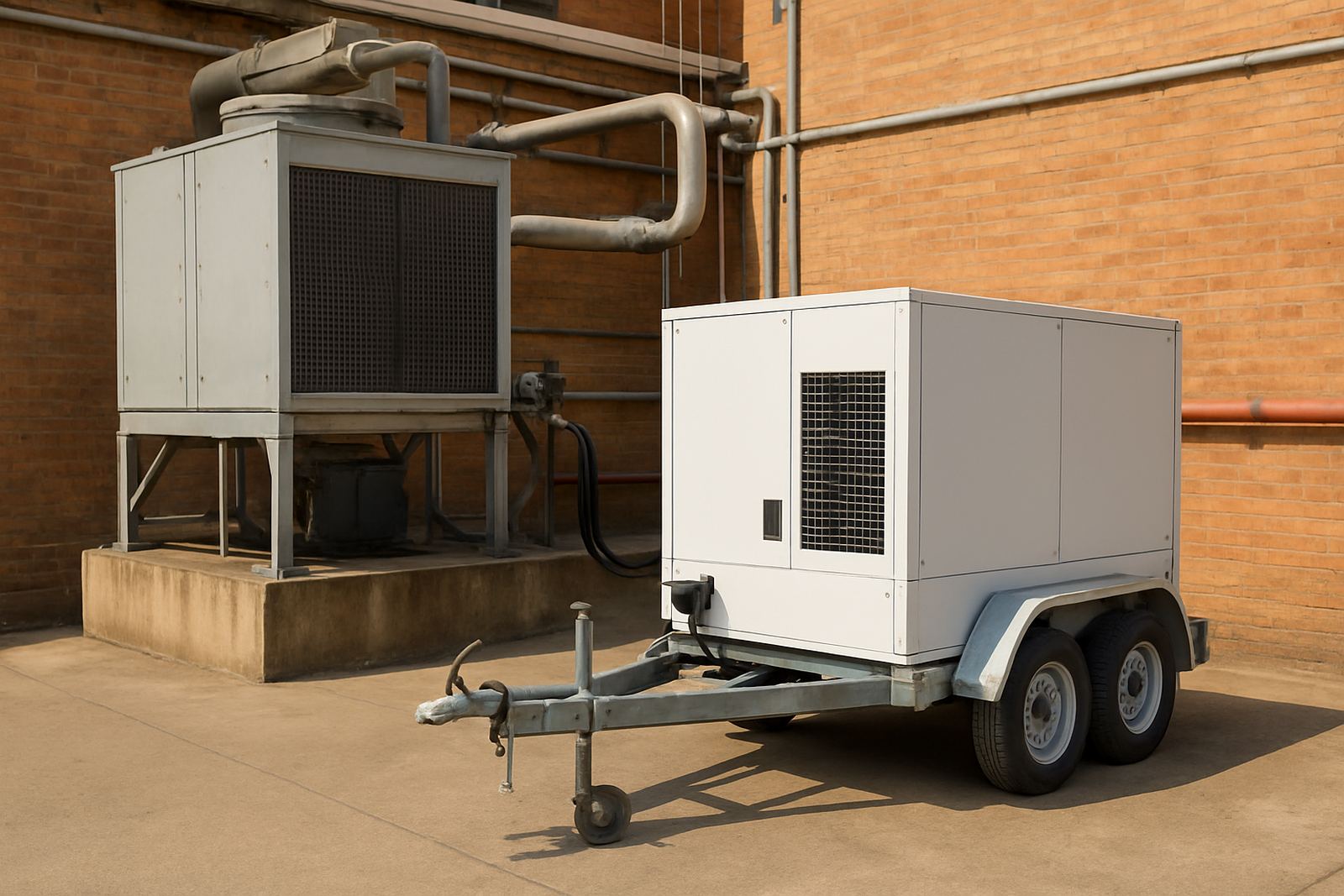
Placement matters almost as much as size. Put the temporary chiller where it can breathe, where service access is possible, and where it will not block plant movement. Outdoor placement is common, but it must be protected from direct sun, flooding and dust. In coastal areas like Durban or Cape Town, salt air can shorten the life of exposed components if the unit is left without proper care.
Keep the condenser side clear and avoid recirculating warm air back into the machine. If the unit is near a workshop wall or in a narrow alley, heat build-up can knock down capacity quickly. We have seen temporary units moved twice on the same day because the first location was too close to an extraction fan or a hot process exhaust, which is avoidable with a proper walk-through.
- Choose a level, ventilated area with maintenance access
- Avoid direct sun where possible
- Keep away from welding fumes, dust and steam
- Provide protection from rain, flood water and unauthorised access
5. Assign Operating Responsibility Before Start-Up
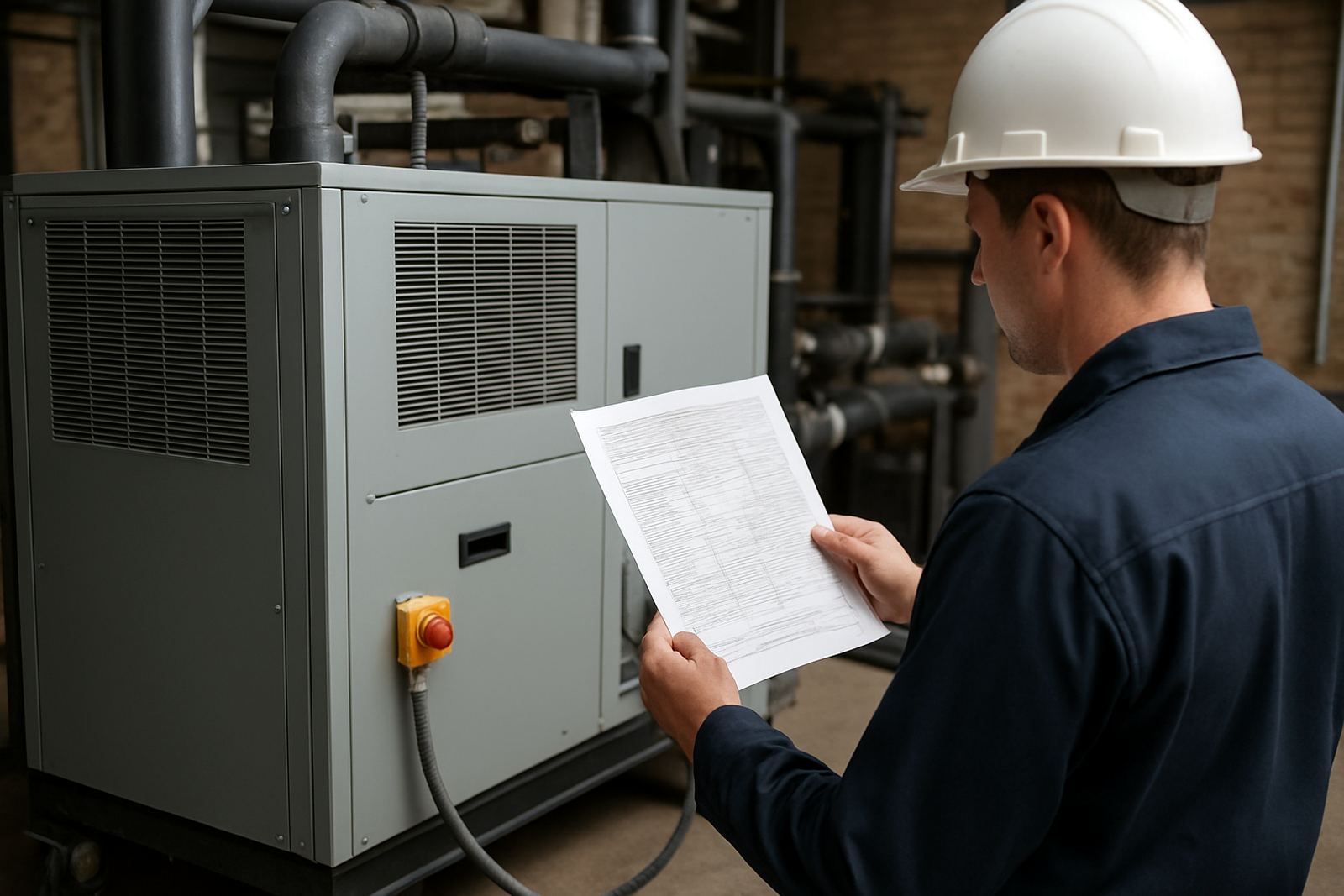
Temporary cooling works best when one person owns the process. That person should know the normal operating range, alarm response, daily checks and who to call if pressure drops or temperatures drift. If nobody is assigned, small problems are usually noticed too late, then the process runs hot and production is lost.
Hand over the basics in writing and make sure the operator understands what a good reading looks like. For temporary systems, this should include flow, temperature setpoint, alarm signs and what to do during power interruptions. It also helps to have one backup person on each shift, especially on sites running nights or weekends.
- Name one primary operator and one backup
- Record normal temperature and flow readings
- Explain alarm response and shutdown steps
- Keep a daily log for checks and any changes
6. Do a Short Daily Checklist While the Unit Is Running
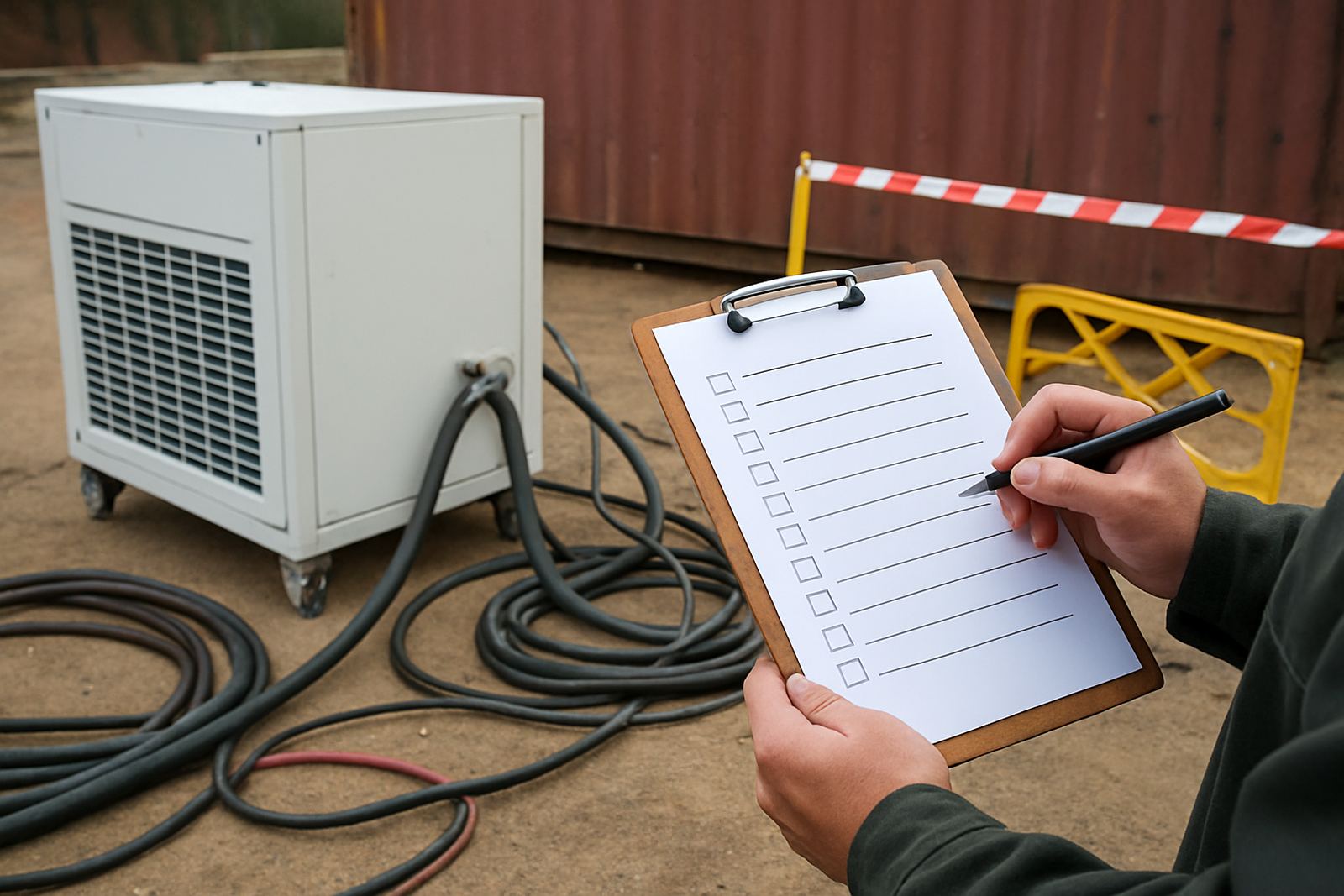
Once the temporary system is in service, a quick daily check prevents bigger trouble later. Look for leaks, blocked filters, abnormal vibration, alarm codes and any rise in supply temperature. On process lines, even a small drift can affect product consistency, so it is worth checking the unit at the same time each day rather than only when somebody remembers.
This is especially important during municipal water restrictions, dusty winter conditions or heat waves in inland towns such as Rustenburg and Alberton. A temporary setup that starts well can still fail if nobody watches the basics. Keep the checks simple and practical, not just a paper exercise.
- Check supply and return temperatures
- Inspect hoses, clamps and fittings for leaks
- Confirm power supply and alarms are normal
- Clean strainers or filters if required
- Look for unusual noise, vibration or poor flow
When Temporary Cooling Is Worth Putting In Place
Temporary cooling is worth using when downtime would cost more than the hire or service arrangement. It is often the right answer during planned maintenance, chiller failure, pipework replacement or a production increase that pushes the existing system too hard. The key is to treat it as a proper process, not a stopgap with no controls.
Raynen supplies and services industrial water chillers and cooling units for lasers, moulds and process lines across South Africa, including Johannesburg, Pretoria, Durban, Cape Town and Rustenburg. If you need help planning a temporary setup, our team can check the load, site conditions and connection points before the unit is put to work.
- Use temporary cooling for breakdown cover, shutdowns or extra load
- Plan the setup before the process overheats
- Keep responsibility, access and power clearly assigned