What a Filtration Skid Does in a Cooling Circuit
A filtration skid is a packaged water cleaning set that is installed on a cooling circuit to remove suspended solids before they can settle in pipes, strain small passages or load the pump. On laser cooling, mould temperature control, and process lines, it helps protect heat exchangers and keeps water flow more consistent. That matters in workshops around Alberton, Germiston and Boksburg where fine dust and workshop debris can enter open or semi-open systems.
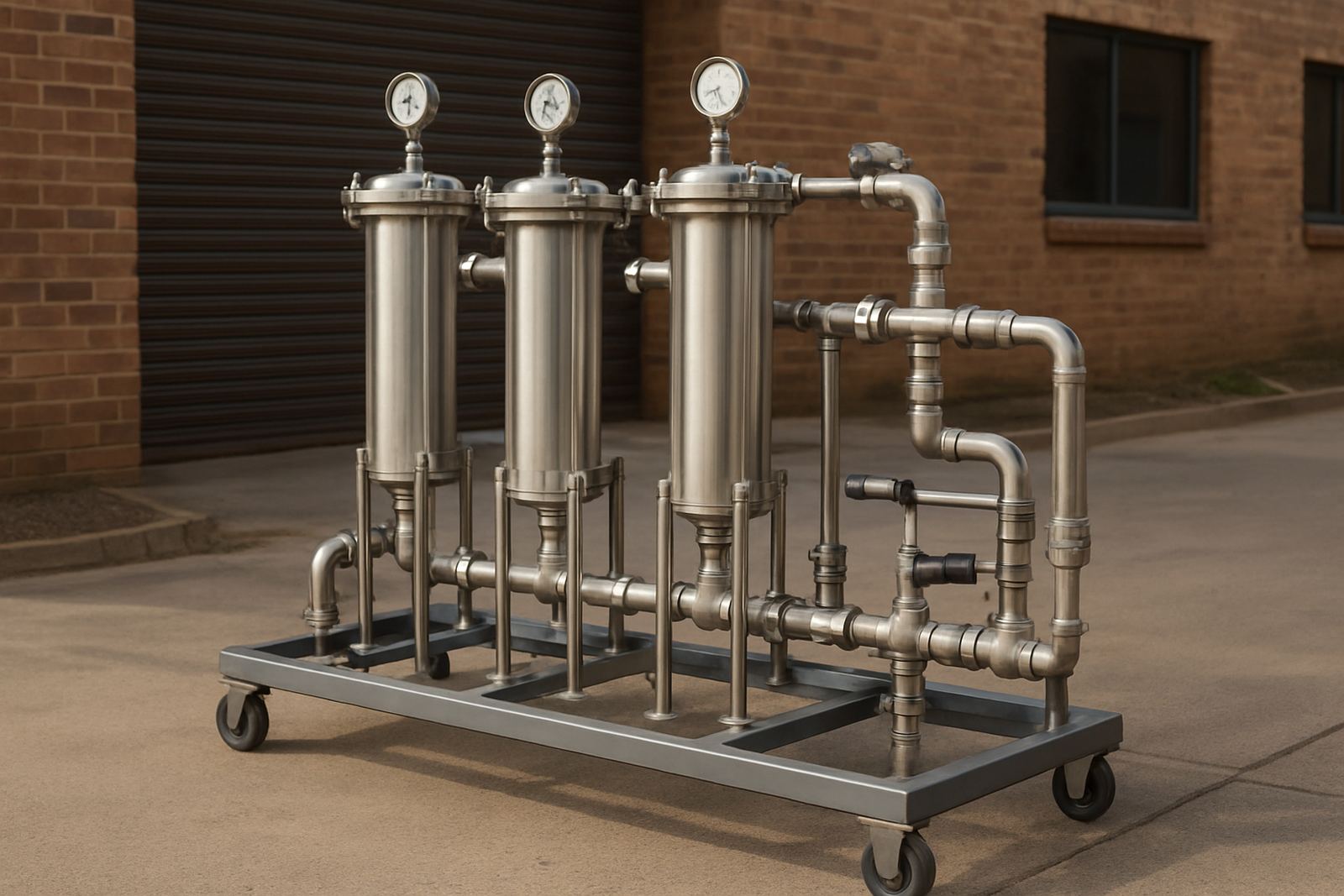
The skid is usually fitted as a side-stream unit or as part of the main recirculation loop. It can include a pump, pre-filter housing, cartridge or bag filtration, pressure gauges and isolation valves. Some systems also include a bypass line and drain point for quick servicing. If the cooling water is being used in a plant with hard municipal supply, borehole top-up, or make-up water from drums, a filtration skid can reduce the rate at which scale and grit build up in the circuit.
Size Options and Typical Build Details
Filtration skids are supplied in practical sizes to suit small laser cells right through to larger mould cooling and process cooling loops. The right size depends on tank volume, circulation rate, particle load, pipe size, and how often the system is topped up. A compact skid may suit a single machine cell, while a larger frame is better for shared cooling water serving several users on one line.
- Compact skid for 50 to 200 litre reservoirs and low flow applications
- Mid-size skid for 200 to 800 litre systems with steady duty cycles
- Large skid for shared circuits, multiple machines, or higher dirt loading
- Filter media options for fine particles, general dirt, or heavier swarf control
- Frame-mounted layout for easier access during maintenance and service checks
Frames are generally supplied in powder-coated steel or similar industrial finish, with pipework arranged for practical maintenance access. Where the cooling area is tight, the skid can be built narrow enough to pass through standard workshop doors and into plant rooms with limited floor space.
Where a Filtration Skid Suits Best
This type of unit suits sites where cooling water must stay clean over long running hours. That includes laser cutting workshops, injection moulding and mould temperature control, plastic processing, food and packaging lines, and general industrial cooling in fabrication plants. It is also useful where equipment is sensitive to blocked passages, such as smaller laser heads, control cabinets with water cooled components, or mould channels with narrow waterways.
In coastal areas like Durban and Cape Town, airborne moisture and corrosion risk can increase maintenance needs on filters and housings. Inland sites around Pretoria, Johannesburg and Rustenburg may see more dust and scale depending on water quality and workshop conditions. A skid is especially useful where load-shedding or short shutdowns lead to frequent restarting, because restart cycles can stir up settled dirt in the system.
- Laser cutting and laser cooling loops
- Mould temperature control circuits
- Process lines with recirculating water
- Plants using make-up water with variable quality
- Shared systems running many hours per day
Installation, Power and Site Requirements
Installation is normally straightforward if the cooling circuit has enough space for a bypass or inline connection and a safe drain point. The skid should be positioned on a level floor with clear access for filter changes and gauge checks. For outdoor or semi-exposed areas, it is better to keep the unit under cover to limit sun damage and reduce corrosion risk on fittings and panels.
Most skids need a standard electrical supply for the pump and any controls, with proper isolator protection and cable sizing to suit the motor load. If the skid is tied into a chiller room or plant with shared controls, the wiring should be arranged so alarms and pump status can be monitored without guesswork. Water connections must allow enough flow for the intended duty, and pipework should be supported properly so vibration does not damage flexible hoses or fittings over time.
Where systems use compressed air for valves or controls, a clean and stable air supply is needed. If the plant has temporary cooling, bypass routing or mobile support equipment, the filtration skid can often be linked into the same loop for short-term use during repairs or maintenance shutdowns.
Servicing, Filter Changes and Water Care
A filtration skid only works well when it is serviced on time. The filter element should be checked for pressure drop, visible dirt loading and any sign of bypass leakage. In many plants the first warning sign is a rise in temperature difference, reduced flow, or a pump that starts working harder than usual. If water treatment is ignored, fouling can return quickly and the skid will have to do too much work.
Good care includes regular checks on water clarity, pH where relevant, conductivity on treated systems, and any signs of oil ingress from nearby machinery. In workshops with cutting oils or mould release products present, contamination can build up fast and the filter housing may need more frequent cleaning. On sites around the coast, service intervals may also be shorter because of humidity and corrosion risk on fasteners and fittings.
- Check pressure gauges before and after the filter
- Inspect seals, drain points and housing lids for leaks
- Confirm pump noise, vibration and motor temperature
- Review water condition after any breakdown or repair work
- Keep spare filter elements on hand for critical production lines
What to Check When Ordering a Filtration Skid
When ordering, the main details to confirm are the flow rate, tank size, connection size, water type and the amount of dirt you expect to remove. It also helps to know whether the skid will protect one machine or several points on a shared line. If the application includes lasers or moulds with narrow waterways, tell us the smallest passages in the system so the filtration level can be matched properly.
We also check the available electrical supply, space for installation, preferred orientation of the unit, and whether the skid must fit into an existing cooling circuit with limited downtime. If a plant is in Johannesburg, Pretoria, Durban, Cape Town or Rustenburg and needs support during a shutdown window, the planning has to be done carefully so commissioning is not rushed. The more detail supplied upfront, the easier it is to size the skid and avoid repeat changes later.
Useful ordering details include inlet and outlet sizes, operating hours, water temperature range, and whether the system sees oil, scale, dust or process debris. If you are unsure, send photos of the current setup through the enquiry form and we can work from there.
Key facts
| Application | Filtration support for industrial cooling circuits, lasers, moulds and process lines |
|---|---|
| Typical flow range | About 1 to 30 m3/h depending on circuit size and filtration stage |
| Filtration media | Cartridge, bag, or staged filtration depending on dirt load and target particle size |
| Construction | Skid-mounted frame with pump, housing, valves, gauges and service access |
| Power requirement | Single-phase or three-phase supply depending on pump size and control package |
| Service intervals | Based on pressure drop, water quality and site dirt load, often weekly checks on busy plants |